
LOGAN — Farmers in the Great Salt Lake Basin say rapid growth and development are placing increasing pressure on both agriculture and water resources, according to a new study published in the Journal of Rural Studies.
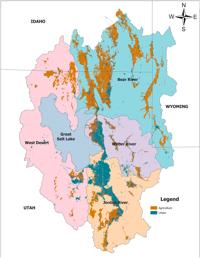
The study, led by researchers at Utah State University, explored the perspectives of 15 commodity farmers from the Bear, Weber and Jordan river watersheds, including six farmers from the Bear River watershed, which includes much of Cache Valley. Researchers conducted in-depth interviews to better understand how farmers view the Great Salt Lake’s decline and proposals to reduce agricultural water use.
While agriculture accounts for roughly two-thirds of water withdrawals in the Great Salt Lake Basin, many participants said they feel unfairly blamed for the lake’s shrinking water levels. Researchers found that farmers generally viewed population growth, housing development and expanding urban demands as major contributors to the region’s water challenges.
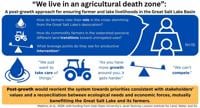
One participant identified only as “Joseph,” a pseudonym used by researchers, questioned why farmers have become the focus of criticism.
“Everybody gets mad that the farmers use all the water,” Joseph said. “Tell me what, there’s one thing changed in 100 years since Bear Lake and this water system got put in 120 years ago. One thing has changed. Farming’s not getting bigger. Why do we have a water problem now?”
Researchers noted that Utah’s population within the Great Salt Lake Basin nearly doubled between 1990 and 2020 and is projected to grow by another 55% by 2065. During the same period, agricultural land has steadily been converted to residential and commercial development.
The study found little enthusiasm among participants for proposals that would permanently transition irrigated farmland to other uses, including solar projects, dryland farming or conservation easements. Farmers cited concerns about financial viability, environmental impacts and the loss of a way of life tied to family and community.

Another participant, identified in the study as “Charles,” described the pressures facing agriculture in rapidly developing areas.
“We’re kind of in an agricultural death zone,” Charles said. “I think sometimes we’re putting [urban] growth ahead of the stability of everybody else who lives here.”
Researchers concluded that successful efforts to restore the Great Salt Lake will likely require not only agricultural conservation measures but also broader discussions about development, long-term water demand and growth across the region. They also recommended involving farmers more directly in shaping future conservation policies.
The study was funded by the Janet Quinney Lawson Institute for Land, Water and Air at Utah State University.