
MILLVILLE – While the shouting over the Republican effort to repeal Proposition 4 is now over, the war of words over the now-defeated voter initiative continues.
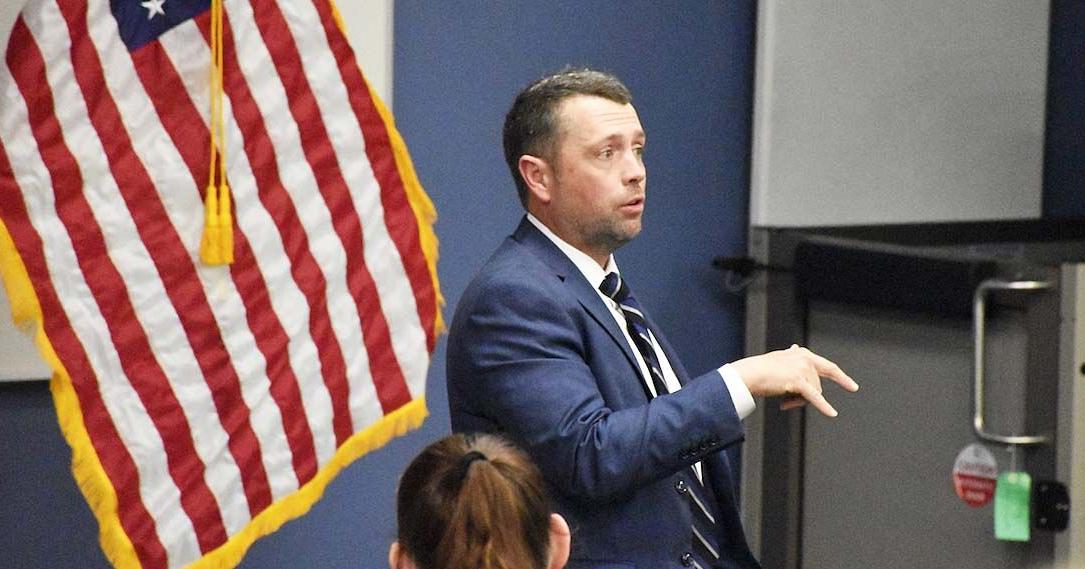
The same day that Better Boundaries group declared victory over the GOP statewide signature gathering effort, Utah Rep. Casey Snider (R-Paradise) told a meeting of Republican precinct chairs and delegates in Millville that the fight over redistricting in Utah wasn’t over.
“I think we’re hosed for a couple of years,” Snider admitted, referring to the court-ordered Democratic enclave created in Salt Lake County by a ruling from Third District County Judge Dianna Gibson that will apparently be in effect through the midterm election in November.
“But I don’t think that we’ll be hosed forever,” he added, “if we can get this map issue straightened out.”
Snider is pinning his hopes for resolution of the hotly debated redistricting issue on House Bill 392, passed by recent general session of the Legislature and signed into law by Gov. Spencer Cox on Feb. 13. That law will empower a three-judge district court panel selected from across the state to hear issues with constitutional impact on Utahns.
“We’re finally going to have fairness in this process,” Snider promised GOP members on Mar. 26. “I’m willing to live by any court ruling that I believe is fair. But I don’t believe that’s happening right now.”
Back in 2018, Utah voters passed the Proposition 4 ballot initiative, which created an independent redistricting commission to redraw state congressional maps.
In 2020, the Utah Legislature repealed and replaced the ballot initiative with a law that made the commission purely advisory. The legislature then drew its own congressional maps in 2021 that ignored the commission’s recommendations, especially slicing up Salt Lake City to carefully dilute Democrats’ influence.
An advocacy coalition comprised of the League of Women Voters and the Mormon Women for Ethical Government sued the state in March of 2022.
In November of 2025, Judge Gibson rejected a congressional district map proposed by the Utah Legislature in favor of one proposed by voter-rights groups.
In siding with the plaintiffs in the Utah redistricting case, Gibson ruled that the GOP approved map, known as Map C, violated Utah’s citizen-passed anti-gerrymandering law known as Proposition 4.
Snider explained that whenever liberal groups are fighting the Legislature, they always choose Salt Lake County in which to file their lawsuits because they can be confident of getting very liberal rulings from the Third District Court.
When state Republican Chair Rob Axson responded with a voter signature petition initiative to repeal Prop 4, Democrats responded with a counter-petition drive to remove those signatures that was ultimately successful in March.
“The district that was created in Salt Lake County is going to be more liberal than the one that Alexandria Ocasio-Cortez represents in New York City,” Snider argued. “That’s how bad the ruling that Judge Gibson is.”
Even more dangerous, he says, is the notion inherent in Gibson’s ruling that voter initiatives are now considered constitutional amendments that the Legislature cannot modify or alter in any way.
That ruling would have precluded legislative action on recent ballot initiatives on medical marijuana and the extension of Medicaid benefits that would have resulted in legalizing the recreational use of the drug and bankrupted the state, according to Snider.
“But we’re going to fix this,” the House majority leaders reassured fellow Republicans. “We’re working on a solution that’s going to stick.”