
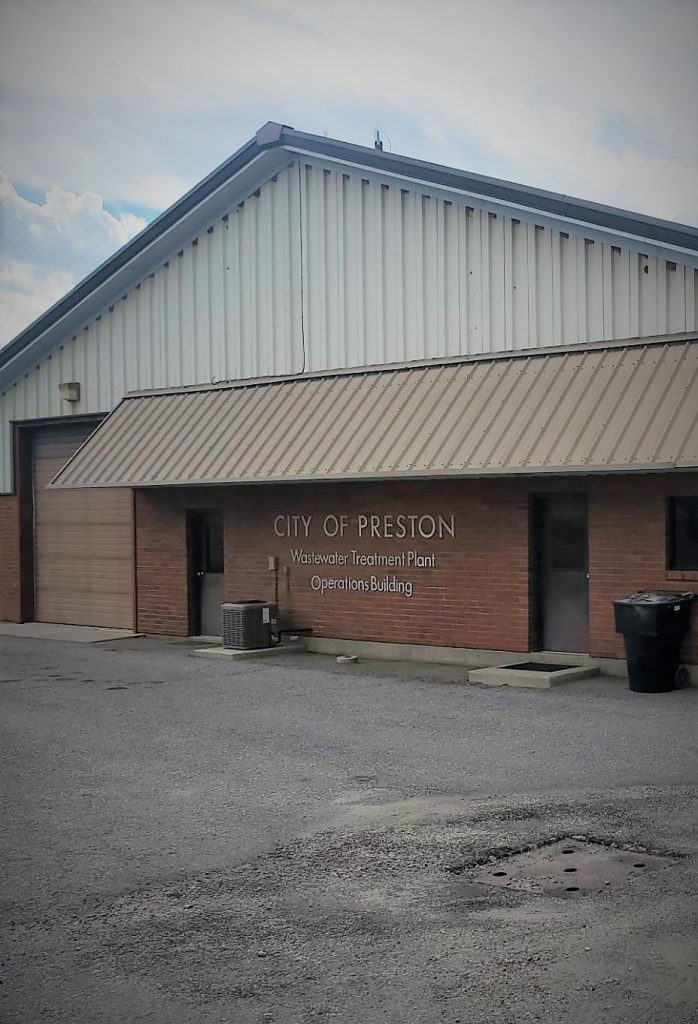
Preston City’s Wastewater treatment plant needs to be upgraded.
PRESTON – Preston Mayor Dan Keller had a visit on Thursday from N. Dale Lish, the area director of rural development for the U.S. Department of Agriculture, and Rudy Soto, the Idaho State director of USDA Rural Development. They were on hand to guarantee support for the city on their wastewater treatment plant. There were other federal officials there to show their support.
The two gave the city nearly $20 million in grants and loans to get started on their wastewater treatment project.
“There is no money changing hands today,” Soto said. “We do have certificates that we will present to the mayor showing the money amount and our support.”
The city received a grant for $10,405,500 and a USDA-RD loan from the day’s meeting and another $8,933,046 USDA-RD loan for 40 years at 2.75 percent.
“We were honored to have Rudy Soto, the State Director, and Dale Lish, the assistant director here,” Keller said. “We also had representatives from U.S. Senator James Risch’s office and Senator Mike Crapo’s office here.”
The mayor said it was good to be recognized in a small town in the southeast corner of the state by dignitaries from the state and federal government.
“We are thankful we, with their help, can meet the environmental requirements without burdening our taxpayers,” he said.
The city is in the fourth year of a seven-year deadline for what they thought was going to be a $30 million wastewater improvement project. The bids came back for more than double their original estimate.
Keller went to state and federal officials with a limit of $34 million and told them they wouldn’t ask their residents for any more money.
Construction on the project will commence this spring and the city doesn’t have to pay the wastewater improvements bill until it is finished in 2026.
The bottom line is, the $70 million project will cost the taxpayers 52 percent and the Feds will kick in 48 percent.
The phosphate emissions that come from their wastewater treatment plant exceeds Idaho Department of Environmental Quality requirements. In order to meet the standards the current wastewater treatment plant needed to be upgraded. The current plant was built some time ago and with the city’s significant growth things needed to be expanded.
The sewer and water system needs a major overhaul, according to city officials and a utility rate increase was inevitable.
When the process first started, residents were told it was going to be a $34 million project and would cost the residents a $30 to $40 increase a month. Without the state and federal officials help our residents were going to have to pay $111 a month for sewer and with the water residents would be paying $150 a month for the next 40 years.
Construction should begin this spring.