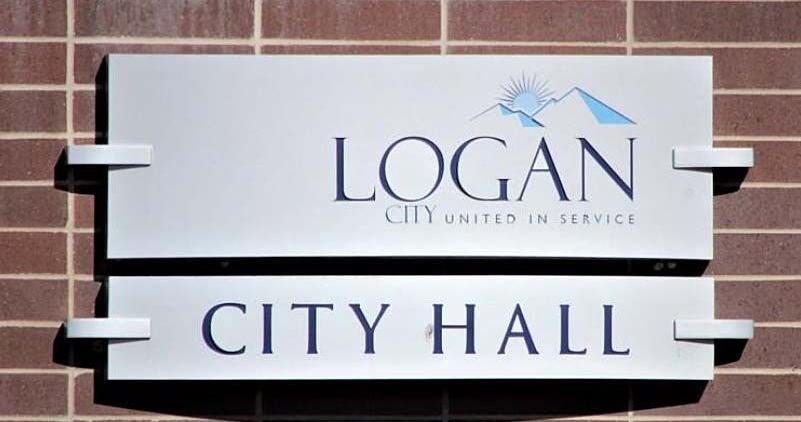
LOGAN – At their regular meeting on Aug. 4, the members of the Logan Municipal Council tabled a scheduled workshop discussion on proposed electrical rate hikes for residential, commercial and industrial customers.
That postponement was suggested by Council Chair Mike Johnson after the meeting ran past 7 p.m. to allow its members to “… rescue Russ Holley.”
In the adjoining Conference Room, the city’s director of community development was facing nearly 100 residents eager to voice concerns about potential regulations concerning data centers.
The council members will now review Resolution 26-27 proposed by Logan Light & Power Director Mark Montgomery at their next meeting on Aug. 18.
The Light & Power department is recommending that Logan adopt a modest electric rate increase of about 2.5 percent overall beginning Sept. 1.
As explained in the text of that resolution, the new rate schedule would modernize cost recovery by replacing a capped fuel-cost adjustment mechanism developed in 2006 and ensuring that mid-size load customers now fund the substation upgrades they require.
The resolution also states that a separate rate framework for very large load customers – like data centers – is being developed under the 180-day moratorium approved by council members in late June.
The typical residential home, which consumes about 800 kilowatt hours of electricity per month, would see its power bill rise about $2.90 a month, from $104.62 to $107.52, according to the proposed schedule.
The bill for a small commercial shop, which consumes about 3,000 kilowatt hours of electricity monthly, will rise about $11.65 per month, from $374.75 to $386.40.
The power bill for a medium-size business that consumes about 15,000 kilowatts monthly, would rise by about $44.05 a month, from $1,729.15 to $1773.20.
The proposed rate hikes are necessary to cover the cost of the power that Logan City purchases on the commercial power market and its expanding power infrastructure (poles, wires and substations), according to Montgomery.
The resolution points out that power purchased by the city for $25 million in 2022 rose to $30 million in 2025, an increase of 20 percent in just three years.
Moreover, the city has invested $34 million in substations, equipment and system upgrades in the last two years, all funded from utility savings.
Even after the proposed utility increases, Montgomery says that the typical home in Logan will still pay less for electricity than it would if that residence were serviced by Rocky Mountain Power.
Originally incorporated in 1904, Logan City Light & Power currently operates hydro, natural gas and solar power generation facilities that produce more than 18 megawatts of electricity locally and contracts from regional utilities for additional power as needed.
One of those suppliers is the Utah Associated Municipal Power System (UAMPS). A project-based consortium, UAMPS provides a variety of power supply, transmission and other services its 50 members serving nearly 400,000 customers in Utah, Arizona, California, Idaho, Nevada, New Mexico and Wyoming.