
TREMONTON – In the race to retain his seat in Congress, U.S. Rep. Blake Moore (R-UT) has based much of his campaign on his role in helping the Trump administration pass its landmark legislation in Congress.
Widely known as the One Big Beautiful Bill Act (OBBBA), the new law benefitted Utah families by making the Trump tax cuts of 2017 permanent and creating investment accounts for younger Americans, among other benefits.
But that legislation also had a negative side, from the perspective of renewable energy advocates who met here on April 24, by reducing Green New Deal tax incentives passed during the Biden Era.
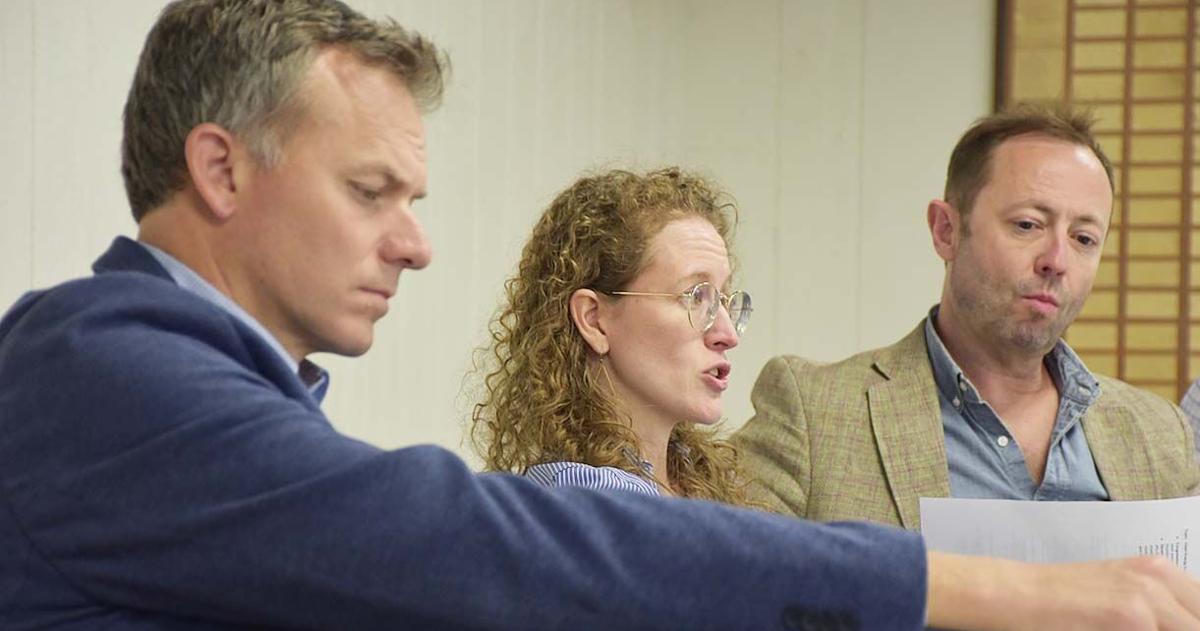
Following a brief tour of a Steel Solar farm array in Plymouth, Moore met with representatives of state and local governments as well as energy industry executives in Tremonton to discuss the changing outlook in Washington, D.C.
The 800-acre solar array in Plymouth is owned by DESRI, a leading renewable energy company that develops, owns and operates utility-scale solar, wind and battery storage projects throughout the United States, according to Liz Peyton, an executive of D.E. Shaw Renewable Investments (DESRI).
Since 2010, she explained, DESRI has worked closely with valued communities and trusted partners to create a future powered by renewable energy, managing a diversified portfolio across 22 states generating more than 1.1 giga-watts of power, enough for nearly 2 million homes.
The Steel Solar facility is typical of DESRI plants, Peyton said, generating about 80 mega-watts of power which is distributed via the Utah Association of Municipal Power Systems (UAMPS), with a estimated service life of 30 to 40 years.
The OBBBA significantly rolled back many of the core tax incentives that clean energy projects have relied on since the passage of the dubiously named Inflation Reduction Act of 2022, according to the Tax Foundation, a non-profit, non-partisan group that advocates for a U.S. tax code that doesn’t stand in the way of business success.
Under the new law, tax credits for wind and solar projects phase out much sooner. To qualify, those project must be completed by the end of 2027 or begin construction by July of 2026.
All new clean energy projects must also now meet strict foreign ownership and sourcing requirements to be eligible for tax credits. The OBBBA denies credits to project that are owned or controlled by foreign entities, especially the Chinese government.
Peyton said that about half the components included in the Steel Solar array were manufactured in the United States to comply with the new regulations.
While imposing stricter rules on wind and solar projects, the OBBBA largely preserves tax credits going into the next decade for alternative clean energy technologies like battery storage and carbon capture.
In their roundtable discussion in Tremonton, some of the renewable energy industry advocates complained to Moore that the new laws amounts to “weaponizing” the U.S. Department of the Interior against clean energy, especially “a vendetta against wind-powered projects.”
In his remarks, Moore made little effort to sugarcoat the impact of the OBBBA, but promised that his office would do whatever was possible to protect Utah renewable energy projects on a case-by-case basis.
Participants in the roundtable discussion included Moore; Peyton, Liesl Limburg and Sherry Stevens of the Governor’s Office of Economic Opportunity; Rhonda Perkes, representing the Utah Association of Municipal Power Systems (UAMPS); Josh Craft and Logan Mitchell of Utah Clean Energy; Stan Summers of the Rural Development office of the U.S. Department of Agriculture; Brandy Grace of the Utah Association of Counties; Boyd Bingham and Lee Parry, representing the Box Elder County Commission; Tom Kotter of Brigham City; Theresa Foxley of rPLUS Energies; and Christine Mikell of Enyo Renewable Energy.