
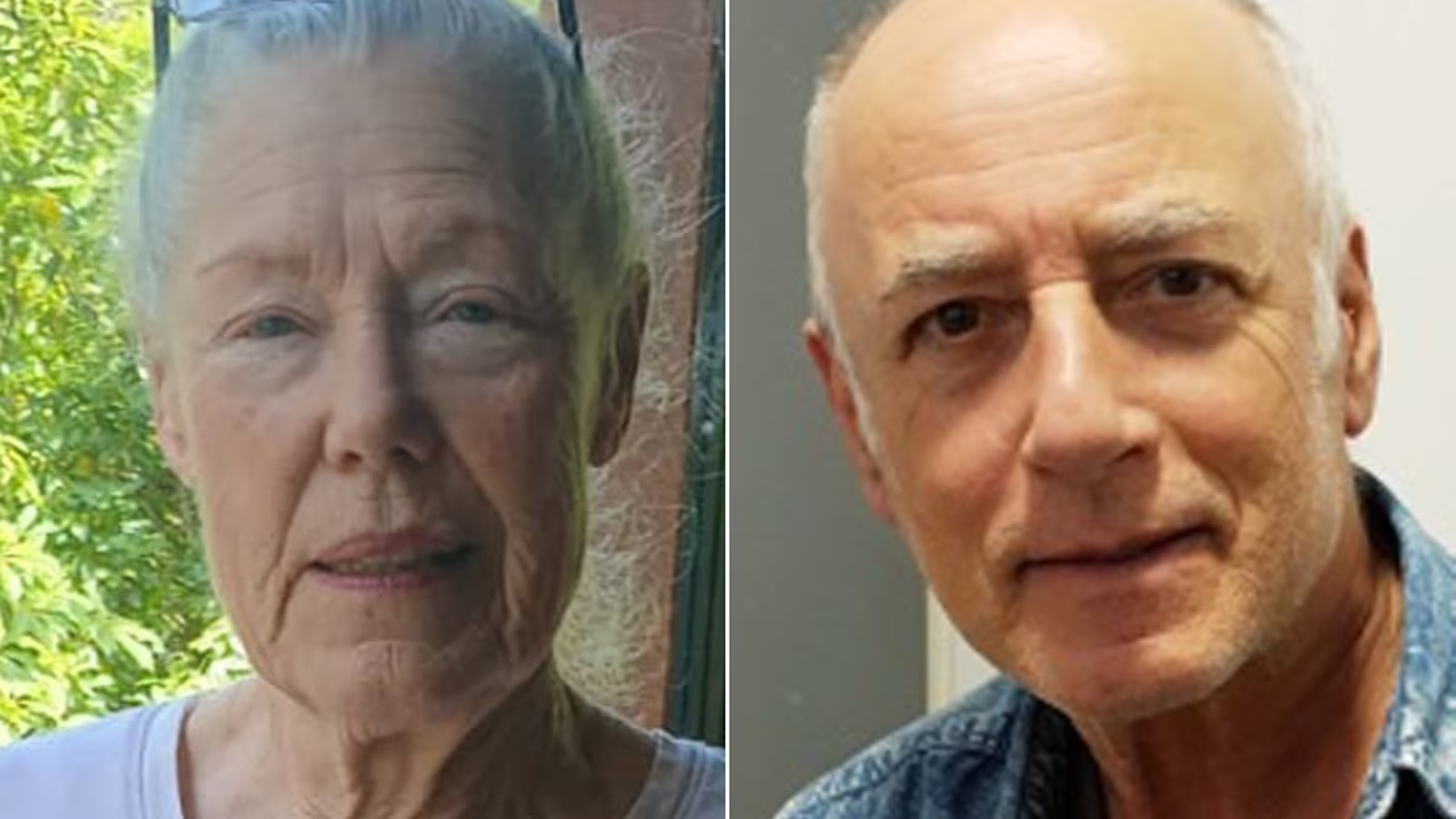
An Australian woman who thought her Jewish family members had been lost in the Holocaust over 80 years ago says she feels “blessed” to have found about 50 living relatives through DNA testing.
“For me, it’s like having a black-and-white photograph turn into color,” Adriana Turk told ABC News of finding her lost relatives. “It’s like a jigsaw puzzle. I put the last little piece in.”
The 74-year-old said she grew up not knowing much about her late father, John Hans Turk, except that he was Jewish, had fled Nazi Germany in 1937 to New Zealand, where she was raised, and thought his entire family had died in the Holocaust.
According to the United States Holocaust Memorial Museum, 6 million Jews in Europe died in the Holocaust between 1933 and 1945 after the Nazi German regime and its Axis allies arrested Jewish residents and citizens and sent them to death camps.
Adriana Turk said her father, who died in 1990, never spoke to her about his past, and she only picked up small bits of information from her late mother.
“He just didn’t talk to me about anything, about the world, about his pain, about his mother, his sister,” Turk said. “Only he survived, so maybe that guilt, he didn’t want to talk about it.”

John Hans Turk fled Germany in 1937 to New Zealand, where his daughter Adriana Turk was born and raised.
MyHeritage
After Turk’s only sibling, her older brother, died in 2024, she said she felt compelled to learn more about her father’s side of the family and turned to a DNA testing service called MyHeritage for help.
MyHeritage told ABC News that Turk’s DNA test returned nearly 15,000 DNA matches, and when the data was cross-referenced with family trees built in MyHeritage’s platform, her info linked with dozens of relatives in Europe, the Middle East and South America, relatives Adriana Turk said she “knew nothing of.”
Last week, Turk met one of her second cousins — 73-year-old Raanan Gidron – over a video call, and the two strangers-turned-family members said they quickly hit it off.

Adriana Turk of Australia and Raanan Gidron of Israel connected
MyHeritage
“With this DNA discovery, it’s changed my world,” Turk said.
Gidron also described his video call with Turk as a “very exciting moment” and nearly “unbelievable.”
Gidron said he had been working on building out the family tree on his father’s side, and when he received a call from a MyHeritage researcher and learned of Turk, he jumped at the chance to connect with her.
Gidron and Turk are related through their shared great-grandparents.
When the two talked, they even learned that Gidron’s father had written at least one letter to Turk’s father years ago, and that Gidron and his family had previously visited the grave of Turk’s grandfather, Julian Turk.
“I was so full of wonder,” Gidron said, calling their connection “amazing.” “I know that my father used to write to her father before, but there was no communication going on, just a letter or two, but it wasn’t clear what [was] going on [before they lost touch].”
Turk said she has “instantly felt welcomed and loved by” Gidron and their extended family and said the experience “changed” her life.
“These people have healed parts of me that no one else could have healed,” Turk said, adding, “These are new memories being made and it’s beautiful.”
Turk said she is now planning to visit Europe and Germany for the first time in the summer and hopes to visit her late father’s hometown and see her relatives.
Gidron said he hopes to meet with Turk in Germany and said he invited her to Israel as well.
With Tuesday being International Holocaust Remembrance Day, the anniversary of the liberation of the Auschwitz-Birkenau concentration camp and extermination center, Gidron said he wants others to remember what happened during the Holocaust.
“Please do not forget and please do not deny what happened in Europe, in Germany, in Poland, in Ukraine between 1939 and 1945,” Gidron said. “It’s a plea for the human soul.”