
One of America’s most state-of-the-art quarantine centers is preparing to take in the U.S. passengers who were aboard the M/V Hondius cruise ship at the center of a hantavirus outbreak.
Administrators of the National Quarantine Unit in Omaha, Nebraska, say they are ready to help the 17 American passengers stay safe. During a press briefing Friday, the officials likened the upcoming quarantine to a hotel stay and said there is not yet a defined period for how long the passengers will remain at the unit.
“From the moment that the outbreak on the ship was announced last weekend, we have been working closely with our partners,” Dr. John Lowe, the University of Nebraska Medical Center’s director of the Global Center for Health Security, told reporters Friday.
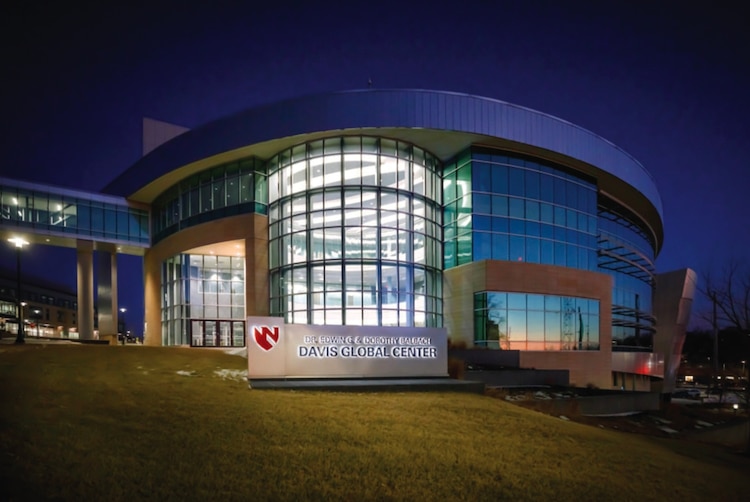
In this undated file photo, the Davis Global Center is shown in Omaha, Nebraska.
UNMC and Nebraska Medicine
As of Friday, no U.S. passenger aboard the M/V Hondius has confirmed hantavirus cases, though several state health officials said they are monitoring their residents who were in contact with some of those who were infected. According to the cruise ship operator, there are 17 Americans aboard the ship.
The National Quarantine Unit, managed by Nebraska Medicine and the University of Nebraska Medical Center is the only federally funded quarantine unit in the U.S.
It opened in November 2019, just months before the COVID-19 pandemic, and the facility’s services were designed to handle highly contagious breakouts.
The unit was created by a previous $20 million grant from the U.S. Department of Health and Human Services’ Administration for Strategic Preparedness and Response.

In this screen grab from a video, a hallway at the National Quarantine Unit is shown at the University of Nebraska Medical Center in Omaha, Nebraska.
University of Nebraska Medical Center
The 20-bed facility contains individual negative air pressure systems to safely house individuals exposed to highly hazardous communicable diseases, according to Nebraska Medicine and UNMC.
Lowe told reporters that the 17 passengers will not need to be transported by EMS teams if they continue to show no symptoms before their arrival.
“We don’t expect to see any of these passengers transported off on a gurney. They’re going to walk off a plane and walk into a vehicle and get driven over here and head into their quarantine room,” he said.
The quarantine period will be determined upon their arrival followed by an epidemiological investigation, leaders of the facility said.
“At this point we don’t have a defined quarantine period,” Lowe said.
Dr. Michael Wadman, the director of the National Quarantine Unit, told reporters that the passengers will have a lot of freedom during their stay and be allowed to make video calls and phone calls and have exercise equipment.

In this screen grab from a video, a room at the National Quarantine Unit is shown at the University of Nebraska Medical Center in Omaha, Nebraska.
University of Nebraska Medical Center
“It’s pretty much like living in a hotel room with delivery of food. They can use their exercise devices in the room, we do daily symptom and monitoring as well as vital sign checks,” he said.
The unit also contains a six-bed national biocontainment training center, which includes “a simulated biocontainment unit for advanced experiential training.”
“This high-fidelity simulation center includes a mock lab and autoclave,” Nebraska Medicine and UNMC said.
Nebraska Medicine and UNMC said the facility is staffed with an all-volunteer team “comprised of highly skilled nurses, physicians, and allied health professionals who complete quarterly training in specialized infection prevention and control processes as well as participate in exercises and drills.”

In this screen grab from a video, a room at the National Quarantine Unit is shown at the University of Nebraska Medical Center in Omaha, Nebraska.
University of Nebraska Medical Center
The medical facility is also home to the Nebraska Biocontainment Unit, a which is designed to care for patients with “high-consequence infectious diseases.”

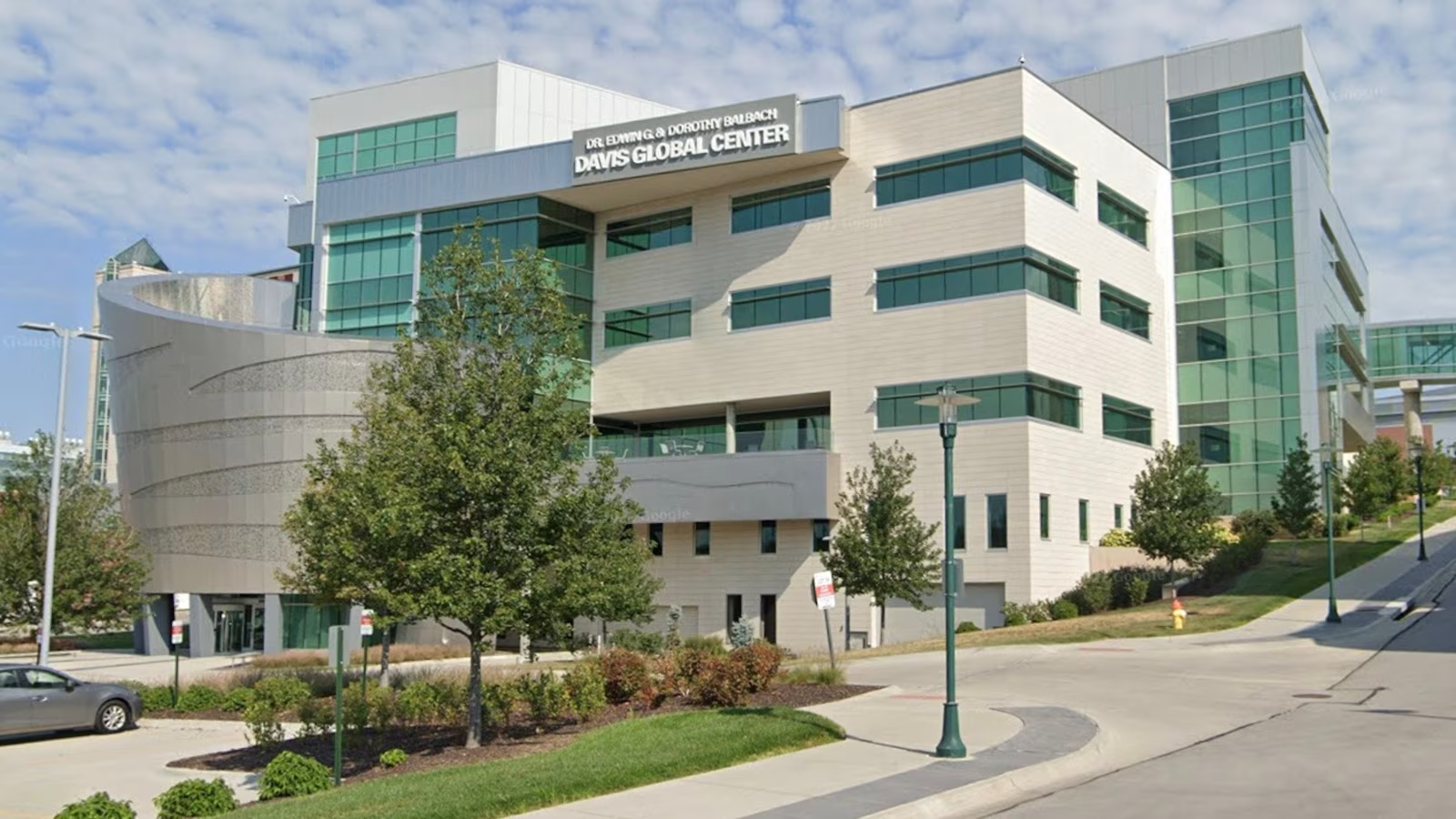
In this screen grab from Google Maps Street View, the Davis Global Center is shown in Omaha, Nebraska.
Google Maps Street View
“Should they develop symptoms and concerning that diagnosis we will assess them and take care of them in the bio containment unit,” Dr. Angela Hewlett, the director of the biocontainment unit, told reporters.
Hewlett stressed the public that the current situation with the virus is different than the COVID-19 pandemic.
She noted that while there are a lot of unknowns about this outbreak, the Andes strain of the hantavirus is generally thought to spread only with very close contact with another individual.
“You really need to be up close and personal with somebody,” she told reporters.