There’s no doubt that high turnout and support from Black voters boosted Democrats’ victory in Georgia, but that was just one piece of the puzzle to explain Democrats’ improved performance in the state over recent elections.
A smaller share of white voters turning out, coupled with their decreased support for Republicans than in past elections helped pave the way for Democrats’ wide victories in Georgia, according to an ABC News analysis of voter polling, turnout data and election results.

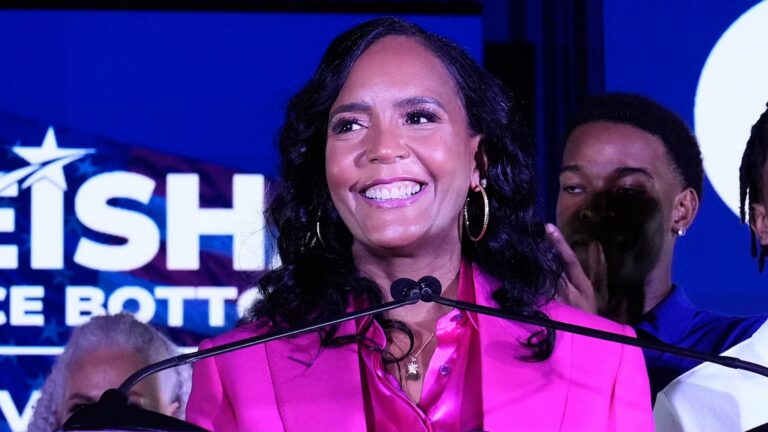
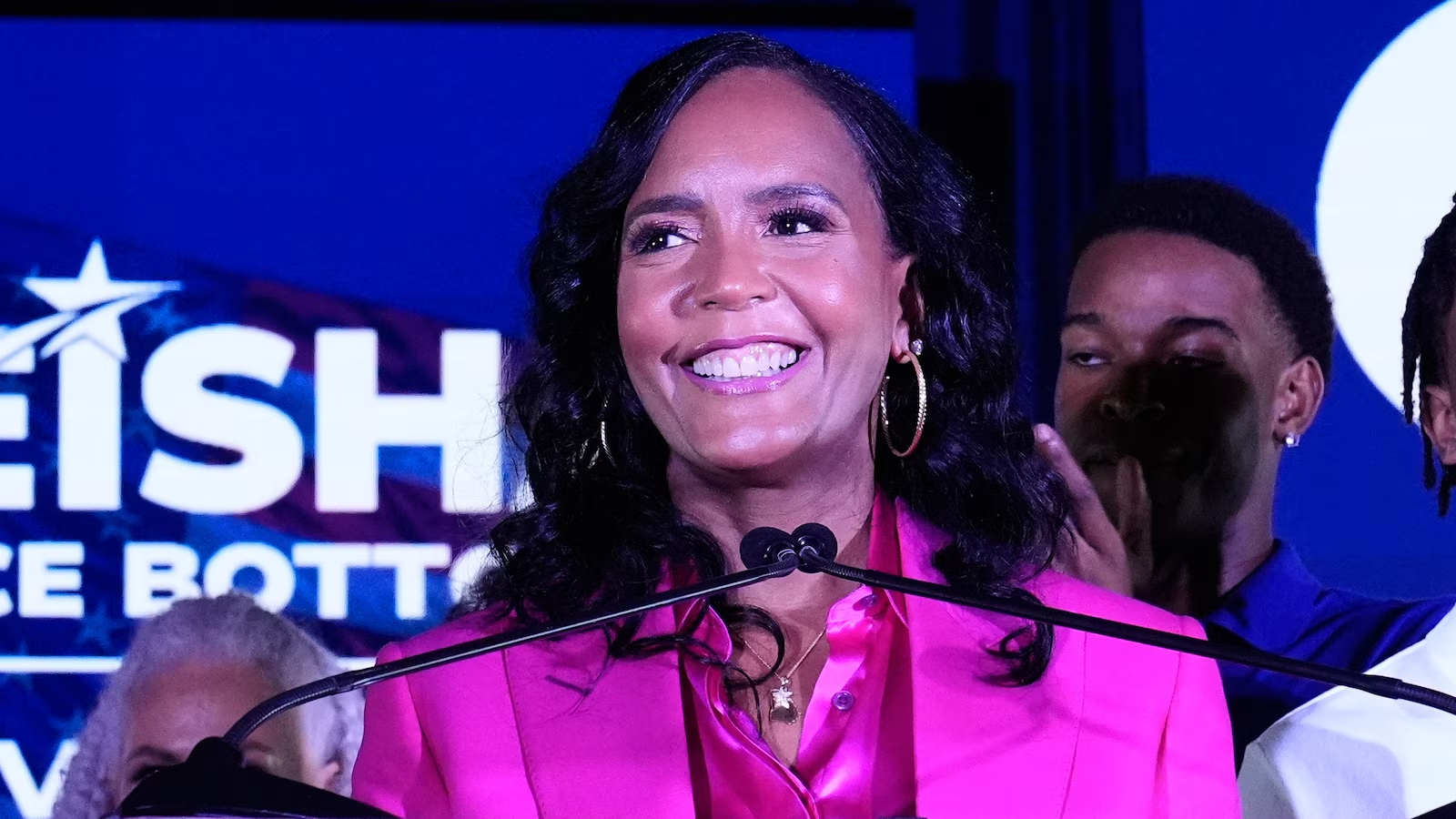
Georgia Democratic gubernatorial candidate Keisha Lance Bottoms speaks at an election night event, Nov. 3, 2026, in Atlanta.
Brynn Anderson/AP Photo
Democratic margins in the state were wide: Keisha Lance Bottoms became the first Black woman to be elected governor in American history, winning by nearly a 9-point margin; the state hasn’t seen a Democratic governor since Roy Barnes won by a similar margin in 1998. Democratic Sen. Jon Ossoff was reelected in a landslide, winning by 18 points and improving on his 2021 runoff victory margin by 17 points and President Donald Trump’s victory in the state in 2024 by 20 points.
Increasing levels of Democratic support among Black and white voters
According to the 2026 ABC News Voter Poll and the Associated Press’ VoteCast from 2022, Bottoms and Ossoff performed better among white voters than Democratic candidates in the state four years ago.
Democratic candidates for 2022’s gubernatorial and Senate races in Georgia lost the white vote by 49 and 39 points, respectively. Bottoms and Ossoff narrowed that margin considerably, losing white voters 31 and 19 points, respectively.
Moreover, Democratic candidates in Georgia this year performed slightly better among Black voters than they did in 2022. Ossoff’s 87-point margin was slightly better than Democratic Sen. Raphael Warnock’s 82-point margin in 2022; Bottoms’ 83-point margin was an improvement on Stacey Abrams’ 75-point margin against Gov. Brian Kemp in 2022.

Sen. Jon Ossoff, Democrat from Georgia, speaks during an election night party after winning reelection in the US midterm elections in Atlanta, Georgia, November 3, 2026.
Erik S. Lesser/AFP via Getty Images
Looking at the turnout among Black and white voters in Georgia
Georgia’s recently released voter file and the ABC News Voter Poll show Black voters’ turnout and support were important contributors to the Democrats’ big wins in the state.
Midterm elections typically have lower turnout rates than presidential years, and 2026 was no different. According to data from voter records firm L2, the turnout rate (the percentage of registered voters that voted) in Georgia’s recent midterm was 55%, down about 18 points from 2024 and showed little change from 2022’s midterm elections.
However, among Black voters, the turnout rate decreased only 12 points from 2024, which is 9 points smaller than the drop for white voters. Relative to 2022, Black turnout remained almost unchanged, while turnout among white voters dropped 8 points from 2022 to 2026.
Even if white voters turned out at a rate similar to Black voters, in isolation, it is unlikely that these likely Republican votes from white voters that stayed home would have been enough to counteract the increased Democratic support among the Black and white voters who did cast ballots.
Looking at turnout by voting frequency
The narrowing of the gap between Black and white voters’ turnout rates in Georgia is also evident when comparing voters by how frequently they voted in the past four federal elections. High-frequency voters are defined as those who have voted in four of the last four elections whereas low-frequency voters are defined as those who have voted in either zero or one of four of the most recent general elections in their state. Occasional voters refers to those who voted in two or three of the last four elections.

A person votes at a polling station during early voting for the 2026 Midterm Elections in Atlanta, Georgia, October 26, 2026.
Cristobal Herrera-Ulashkevich/EPA/Shutterstock
Relative to 2022, occasional white voters saw the largest decline in turnout when compared to low- and high-frequency white voters. These occasional voters had an 18-point decline in turnout compared to the 10-point and 6-point declines experienced by low- and high-propensity white voters, respectively.
Conversely, compared to 2022, Black turnout remained largely unchanged for the different categories of voters by propensity. Together, these factors contributed to the Black and white turnout gap narrowing greatly in 2026, with moderate- and high-propensity Black voters turning out at higher rates than their white counterparts.
ABC News’ Emily Guskin contributed to this report.