
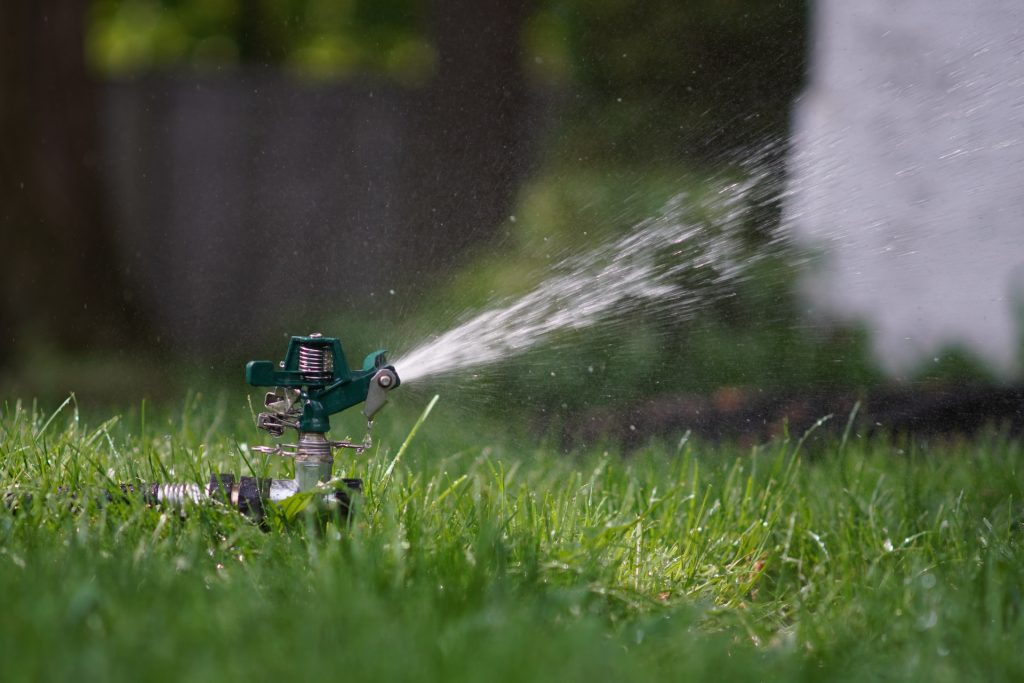
FILE PHOTO: sprinkler watering a lawn. Photo by Paul Moody on Unsplash
SALT LAKE CITY – The Utah Division of Water Resources continues to promote responsible water usage with its Weekly Lawn Watering Guide. In a recent development, the division has added a Low Water Use Guide alongside the traditional recommendations, catering specifically to lower water use grass varieties.
As spring unfolds and temperatures increase, the need for water conservation becomes even more critical. Since its inception, the Weekly Lawn Watering Guide has helped residents avoid excessive lawn irrigation and preserve Utah’s water resources. By offering tailored weekly recommendations based on local weather conditions and other pertinent factors, the guide helps residents to make informed decisions about their water usage. For example, based on current conditions the site recommends residents of Cache and Box Elder counties only need to water their lawns once this week, while residents in Rich County won’t need to. Those who have intentionally planted low-water use grasses do not need to irrigate their lawns yet.
The newly introduced Low Water Use Guide is an invaluable resource for individuals who have opted for low-water use grass varieties in their lawns. It also benefits those who prioritize lawn health over appearance during the scorching summer heat. Additionally, residents can refer to the publication “Is Your Lawn Dead or Dormant” by USU Extension for more insights on lawn dormancy.
Shelby Ericksen, the water conservation manager for the Utah Division of Water Resources, emphasized the ongoing significance of this initiative.
“Utah will continue to face challenges as one of the driest states in the country, and water conservation is paramount to our long-term sustainability,” Ericksen stated in a release. “The Weekly Lawn Watering Guide and Low Water Use Guide serve as essential tools for residents to make conscious choices about their lawn watering practices and ultimately contribute to the conservation of our precious water resources.”
Both guides consider various factors, including temperature, precipitation, wind, and soil moisture, to provide personalized watering recommendations on a county-wide level. Residents can access the latest updates and recommendations on the division’s official website and social media platforms.
“We know that many residents may not be aware of the amount of water they use on their lawns or the long-term impact it can have on our water resources,” added Ericksen. “By providing easy-to-use recommendations, we hope to empower residents to make a positive difference in water conservation efforts and the overall resource resiliency in our state.”
The Utah Division of Water Resources encourages residents to continue utilizing either the Weekly Lawn Watering Guide or the Low Water Use Guide, depending on their grass type. Moreover, they should adopt other water-saving measures such as repairing leaky faucets, taking advantage of statewide rebates for toilet replacements and smart irrigation controllers, and exploring landscape conversion incentives offered through UtahWaterSavers.com.
For more detailed information on the Weekly Lawn Watering Guide and other water conservation initiatives in Utah, interested individuals can visit the conservation section of the Utah Division of Water Resources website.