
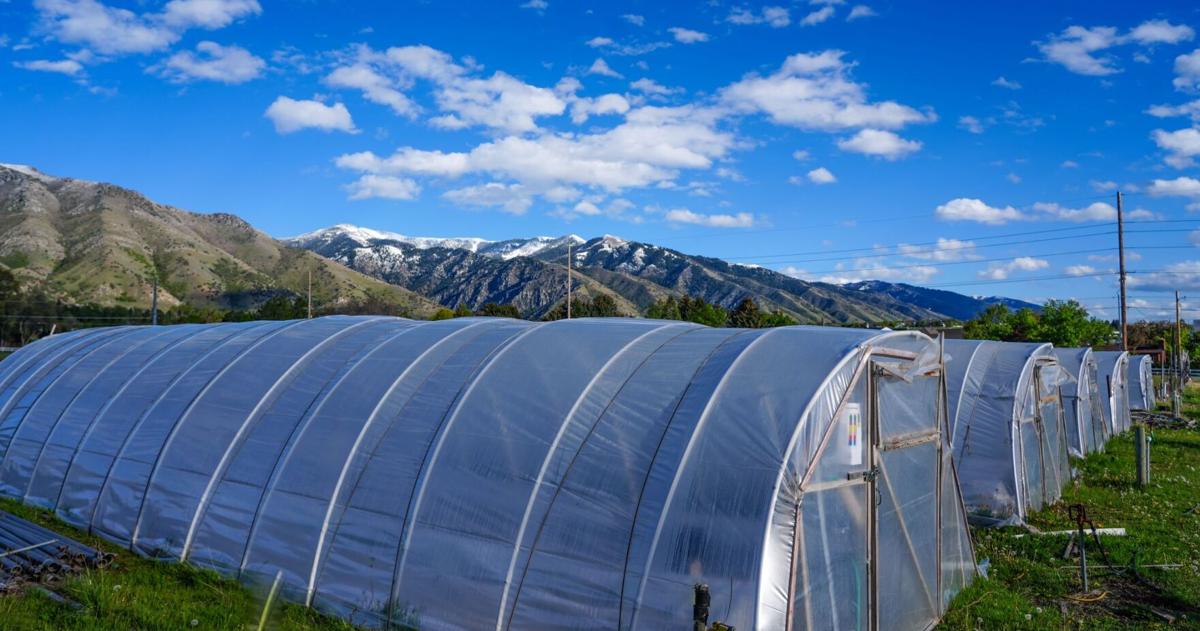
High tunnels can transform how gardeners and farmers grow crops in Utah, offering increased control over environmental conditions, extended growing seasons, and improved crop quality. However, these simple plastic-covered structures, also called “hoop houses,” can present unique challenges that require careful planning and soil management.
For example, asparagus production in a high tunnel can begin up to six weeks earlier than in open fields, while crops like tomatoes can be planted a month ahead of schedule, according to Josh Martin, Utah State University Extension faculty in Iron County.
“High tunnels give us the ability to control water, temperature, and even wind,” he said. “That means higher-quality produce and often higher returns for growers.”
Beyond early production, high tunnels also allow for multiple planting cycles in a single season. Growers can produce two to four successive crops in the same space, maximizing efficiency and output. This intensive use, however, places increased demands on the soil.
Because high tunnels are used year after year without rest, soil health becomes a critical concern, he said. Over time, issues such as nutrient imbalances, salt buildup, soil compaction, and reduced biological diversity can develop. One of the most important recommendations for managing these challenges is regular soil testing.
“If you don’t know where you’re starting, it’s easy to over-apply fertilizers,” Martin said. “Excess nutrients, particularly salts and phosphorus, can accumulate and harm plant growth.”
Growers should tailor fertilization strategies based on specific crop needs, he said. High-demand crops such as tomatoes require more nutrients, while leafy greens need less. Using targeted fertilizers instead of general-purpose blends can help prevent imbalances.
“Water management also plays a key role,” Martin said. “Drip irrigation is commonly used in high tunnels to deliver water directly to plant roots, but it can contribute to salt buildup if not carefully monitored. Periodic flushing with water or allowing natural precipitation into uncovered tunnels can help reduce salinity levels.”
In addition, Martin said maintaining soil organic matter is essential for long-term productivity.
“Keep organic matter levels between 3% and 5% and add at least an inch of organic material annually,” he said. “However, growers are cautioned against relying solely on compost, which can also lead to excess phosphorus over time.”
Cover crops are one of the most effective tools for improving soil health. These crops can add organic matter, recycle nutrients, and improve soil structure. In high tunnels, cover crops can even be grown during winter months due to the warmer, protected environment.
“Ultimately, growers should develop a consistent management system tailored to individual growing conditions,” he said. “Keep it simple, understand your system, and manage it consistently.”
Visit the Extension high tunnels website for further information about building, maintaining, and using them.