

LOGAN – In the early 1900s a process was developed to convert atmospheric nitrogen to a form that allowed for the industrial-scale production of fertilizer, which led to a large increase in global food production.
Related to that work, Utah State University biochemist Lance Seefeldt says food productivity is dependent on the availability of fertilizer, but the nitrogen needed can’t be taken in from the air.
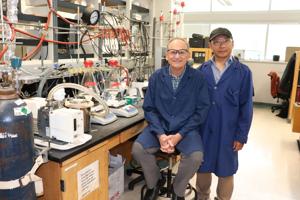
The Bill & Melinda Gates Foundation is funding a project to re-engineer the biology of cereal crops to achieve nitrogen fixation on their own from sunlight, without applying fertilizer. Since 2019 Seefeldt and USU Senior Scientist Zhi-Yong Yang have collaborated on that project.
Findings from the research published earlier this month, report a pathway which involves a newly known minimum of seven genes that allow the plant cell to make the enzyme that can convert N2 gas from the air to fertilizer.
Yang said the goal is to place genes into the crops’ mitochondria, enabling them to generate sufficient energy to drive nitrogen fixation.
Seefeldt said the possibility of freeing cereal crops from the need for added fertilizer is significant.