
President Donald Trump’s administration is set to impose sweeping tariffs on 60 trading partners, including the European Union, according to a notice from U.S. Trade Representative Jamieson Greer’s office released on Thursday.
Greer said Thursday that the 10% to 12.5% tariffs were aimed at combatting “forced labor” violations.
The levies, which take effect on Friday, will ramp up an effort to reconstruct far-reaching duties struck down by the Supreme Court earlier this year. The tariff will begin on the same day that a 10% global tariff announced immediately after the high court’s ruling is set to expire.
The 17 trading partners that will now have a 10% tariff include: Argentina, Bangladesh, Cambodia, Canada, Ecuador, El Salvador, Guatemala, Honduras, India, Indonesia, Jordan, Malaysia, Mexico, Pakistan, Sri Lanka, the United Kingdom, and Trinidad and Tobago.
The Trump administration says these countries have made commitments to adopt, and effectively enforce, forced labor import prohibitions.
Products from the European Union or Taiwan will also have a 10% tariff.
All other trading partners, from 41 countries, have failed to adopt a forced labor import prohibition and will have a 12.5% tariff rate.

Shipping containers on a container ship at the Port of Long Beach, Calif., on July 17, 2026.
Mario Anzuoni/Reuters
These countries include: Algeria; Angola; Australia; the Bahamas; Bahrain; Brazil; Chile; China, People’s Republic of; Colombia; Costa Rica; Dominican Republic; Egypt; Guyana; Hong Kong, China; Iraq; Israel; Japan; Kazakhstan; Kuwait; Libya; Morocco; New Zealand; Nicaragua; Nigeria; Norway; Oman; Peru; the Philippines; Qatar; Russia; Saudi Arabia; Singapore; South Africa; South Korea; Switzerland; Thailand; Türkiye; United Arab Emirates; Uruguay; Venezuela; and Vietnam.
Importers typically offset the tax burden of tariffs in the form of higher prices for shoppers. The new levy, in turn, risks elevated costs for some household goods as shoppers weather a bout of resurgent inflation set off by the Iran war.
The measure closely resembles a proposal issued by the Trump administration in June, White House officials said.

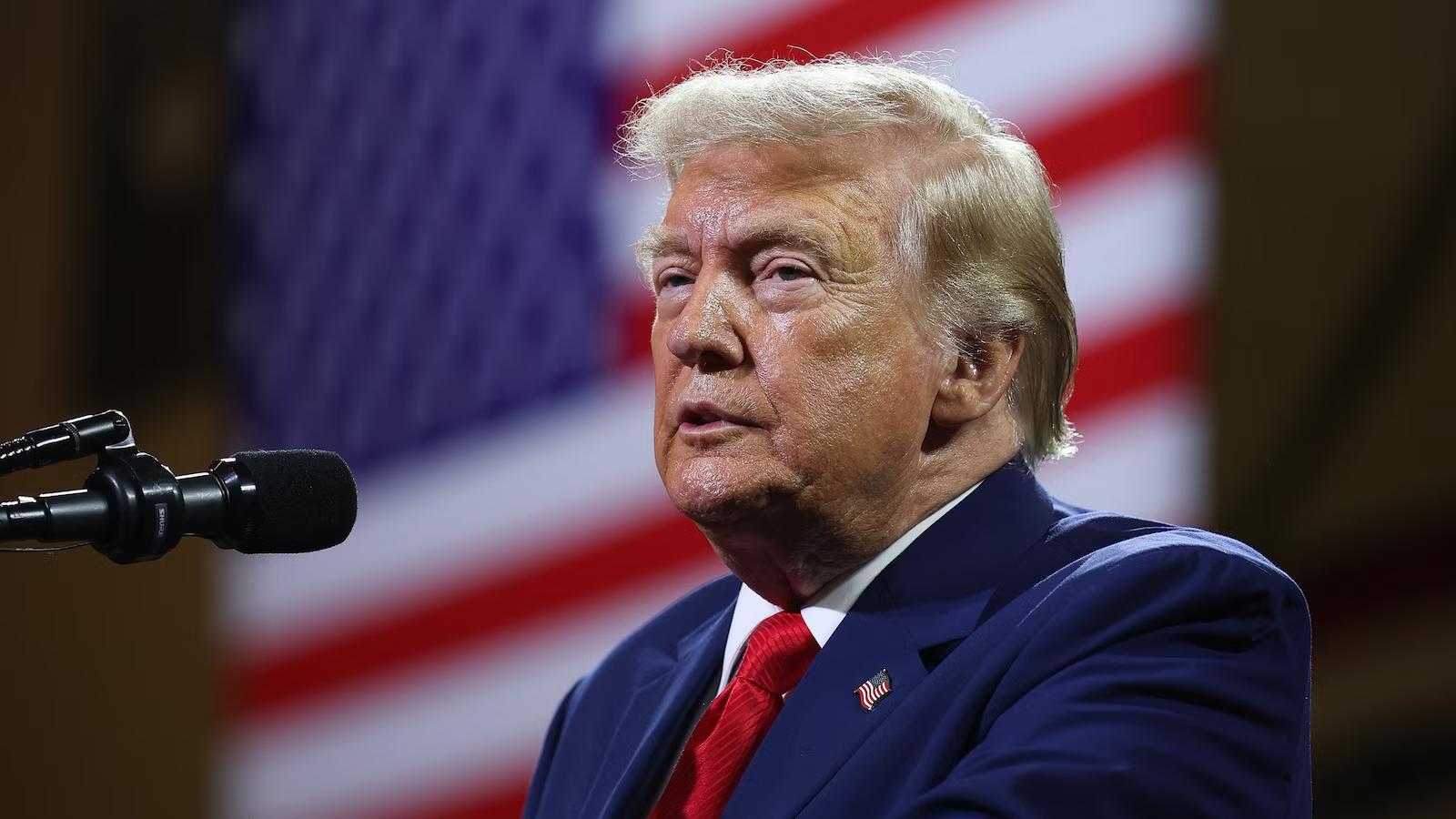
President Donald Trump speaks at Wheeler High School, July 22, 2026 in Marietta, Georgia.
Kevin Dietsch/Getty Images
The finding of wrongdoing followed an investigation initiated by the Trump administration under Section 301 of the Trade Act of 1974, which permits levies imposed in response to an adverse trade policy taken up by another country.
Trading partners affected by the new round of tariffs account for about 99% of all U.S. imports, but a series of exemptions would significantly ease the measure’s impact, investment bank Macquarie previously told ABC News.
Trump is moving forward with the wide-ranging levy as a temporary 10% global tariff was set to end.
Within hours of the high court’s adverse ruling in February, Trump slapped the 10% tariff on nearly all imports under an authority inscribed in a 1974 law. The levy was permitted to take effect for a maximum of 150 days, which lapse at 12:01 a.m. ET on Friday.
To extend the tariff, Trump would have needed to secure Congressional approval. As of late Thursday, Trump appeared unlikely to receive such sign-off from lawmakers.
When the levy took effect, the Yale Budget Lab estimated it would result in price increases amounting to $800 in additional costs for an average U.S. household over the measure’s 150-day duration.
The levy set to take effect on Friday will come after a flurry of country-specific tariffs put forward in recent days.
On Monday, Trump issued a 50% tariff on a set of goods from Canada, including hockey sticks and wine. A day later, Trump announced a 100% tariff on generic drugmakers that would take effect in 2028.
A 25% levy hit some Brazilian goods on Wednesday, including apparel and farm machinery.