
The Supreme Court on Wednesday unanimously sided with a group of New Jersey anti-abortion pregnancy centers embroiled in a dispute with the state’s Democratic attorney general over an investigative subpoena for donor information.
At issue in the case was whether the group — First Choice Women’s Resource Centers — had legal standing to challenge the subpoena on First Amendment grounds before it had even been enforced.
Attorney General Matthew Platkin, who has since left office, sought thousands of pages of documents to determine whether the group has “engaged in deceptive or otherwise unlawful conduct,” including the names and contact information of donors who may have wished to remain private.

A First Choice Women’s Resource Center location is shown in Newark, N.J.
Google Maps Street View
First Choice, a faith-based organization that operates five locations across the state, has called the effort part of a “hostile” campaign meant to intimidate its operations and sued to block the subpoena.
Justice Neil Gorsuch, writing for all nine of his colleagues, concluded the group can move forward with its lawsuit in a bid to protect the privacy of donors.
“From its allegations and declarations, and given our many and longstanding precedents in the area and reasonable inferences about third-party behavior, First Choice has established that the Attorney General’s demand for private donor information injures the group’s First Amendment associational rights,” Gorsuch wrote.
The Court leaned heavily on a ruling from the 1950s in which the NAACP — then leading a campaign for racial integration — succeeded in fending off a demand by Alabama’s attorney general to turn over the group’s private membership rolls.
“Since the 1950s, this Court has confronted one official demand after another like the [New Jersey ] Attorney General’s,” Gorsuch wrote. “Over and again, we have held those demands burden the exercise of First Amendment rights.”

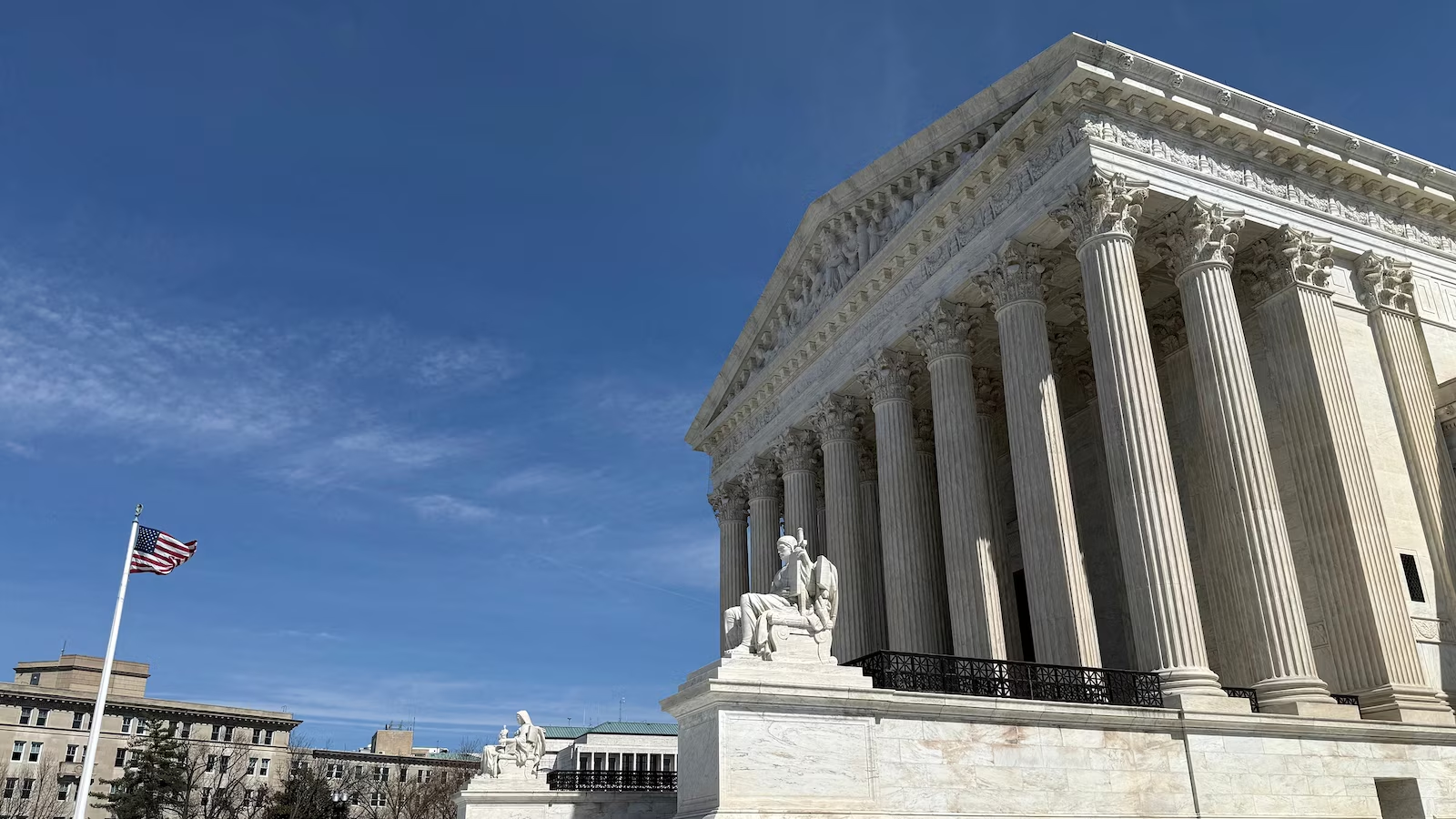
In this March 14, 2026, file photo, a U.S. flag flutters outside the Supreme Court building in Washington, D.C.
Will Dunham/Reuters, FILE
The New Jersey attorney general’s office did not immediately respond to ABC News’ request for comment.
Religious rights advocates, who had backed First Choice in the case, praised the ruling’s broader impact.
“This is a triumph for every faith-based ministry in America,” said William Haun, senior counsel at Becket, a nonprofit religious liberty legal group. “The Court made crystal clear that our First Amendment freedoms—including religious freedom—are ‘necessarily’ associative, and that keeps the federal courthouse doors open for religious groups to protect their governance from intrusive state bureaucrats.”