
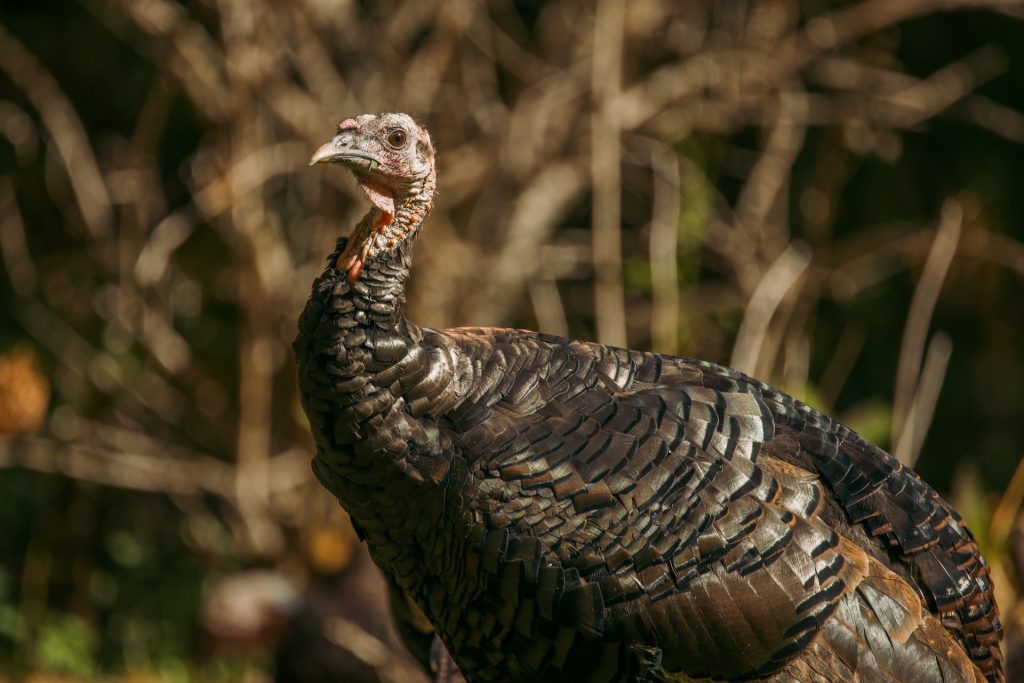
FILE PHOTO: A wild turkey, with grass in mouth, on a sunny afternoon. Photo by Mark Olsen.
SALT LAKE CITY — Utah’s spring general-season turkey hunt is underway as it begins on May 1 and runs to May 31.

The Division of Wildlife Resources would like hunters to know there are plenty of turkeys to hunt. They estimate there are currently between 25,000-30,000 wild turkeys throughout the state. The numbers on turkeys have gone down from last year’s numbers due to the long winter and the depth of the snow, but there are still plenty to hunt.
DWR Upland Game Coordinator Heather Talley said winters with multiple heavy snowstorms that don’t freeze over are difficult for turkeys because soft, deep snowdrifts impede movement.
“We are aware that some winter loss has occurred this year, but we don’t yet have the data on how this unprecedented winter has impacted populations,” she said. “This year, it may be a little more difficult to find turkeys due to that winter kill and displacement from their usual ranges this time of year.
“Utah’s populations have been trending slightly upward for several years, but they declined last year and this year, likely due to drought conditions for multiple years, coupled with the severe winter conditions this year. However, the heavy moisture this year may provide the ideal conditions for brood rearing this summer, which could result in high production and poult survival, producing a boom in the population this coming year.”
In Northern Utah, turkeys can also be found on public land in Cache Valley (including Blacksmith Fork Canyon), the Richmond Wildlife Management Area (along Cherry Creek), the Wellsville Range above Wellsville and Mendon, and Walk-in Access areas around Clarkston.
Turkey numbers are better in Box Elder County than the rest of Northern Utah because the winter was less severe there than in other counties. In Box Elder County, there are turkeys on the Raft River Mountains near Clear Creek, One Mile Creek, Johnson Creek and Wildcat Creek. There are also turkeys on the Pilot Mountain Range.
DWR said Rio Grande turkeys can usually found at lower elevations. River bottoms dotted with cottonwood trees and areas containing mostly oak and pinyon-juniper woodlands are some of their favorite spots. Merriam’s turkeys, on the other hand, are typically found in ponderosa pine forests at higher elevations.
For those planning to hunt, they suggest trying to get out and scout a few days before your hunt begins. Becoming familiar with the area and locating where the turkeys are is key to a successful hunt. You should spend time observing the turkeys’ daily patterns so that during the hunt, you can set up in an area where the birds will be active.
Typically, more turkeys are harvested between 10 a.m. and 2 p.m. than during any other time of the day.
“Turkeys are often found on private property, so be aware of the land ownership in the area you’re hunting and remember that you must get written permission from the landowner before you can hunt on their property,” Talley said. “Also, calls and decoys can greatly increase your success, so take time to practice with those beforehand. And lastly, turkeys have incredible eyesight, so be sure to wear good camo and sit very still.”
Permits for Utah’s statewide spring general-season turkey hunt went on sale on March 2. You can buy a permit for the statewide general season anytime before the hunt ends on May 31. General-season permits are available on the DWR website or at a variety of license agent locations and DWR offices.
For more information on season dates and permits, check the 2022-23 Utah Upland Game & Turkey Guidebook. For information on legal weapon types, see page 23 in the guidebook, and note that rimfire firearms are not legal for the spring turkey seasons. The free guidebook is available on the DWR website or at hunting license agent locations and DWR offices.