
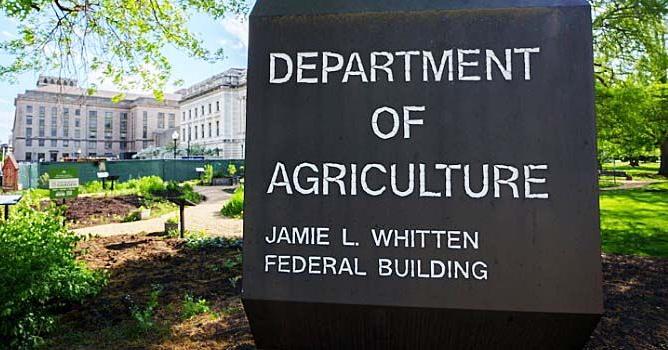
WASHINGTON, D.C. – While Utah was celebrating its pioneer heritage on July 24, the U.S. Department of Agriculture here in Washington announced plans to do a little pioneering of its own.
In a seismic shakeup, USDA Secretary Brooke Rollins announced on that the federal agency would relocate more than half of its staff here in Washington to five agricultural hub locations across the country, including one in Salt Lake City.
Sen. Mike Lee has enthusiastically greeted that news.
“The people making decision about how our forests are managed and our food is grown shouldn’t be distant bureaucrats …” according to Lee.
“Not only is this a big win for Utah’s farmers and ranchers, but also for our land managers as the department moves closer to the people who live, work and rely upon these lands.”
Rollins told the inside-the-Beltway journal Roll Call that the USDA plans to retain no more than 2,000 of its 4,600 employees in the area of the nation’s capitol.
“President (Donald) Trump was elected to make real change in Washington,” Rollins emphasized in her announcement of the moves. “We are doing just that by moving our key services outside the Beltway and into great American cities across the country.”
In addition to Salt Lake City, the four hub locations to which the more than 2,500 UDSA employee will be dispersed to will be in Raleigh, NC; Kansas City, MO; Indianapolis, IN; and Fort Collins, CO.
The USDA provides expert leadership on food, agriculture, natural resources and related issues.
Its subordinate agencies and services include the Agricultural Marketing Services, the Agricultural Research Service, the Animal and Plant Inspection Service, the Farm Service Agency, the Food and Nutrition Service, the Food Safety and Inspection Service, the Foreign Agricultural Service, the U.S. Forest Service, the National Institute of Food and Agriculture and the Natural Resources Conservation Service.
The primary mission of the USDA is rural development, food safety, natural resource protection and international agricultural development.
A July 24 memo issued by the USDA indicates that the move to agricultural hub locations throughout the country is coming in lieu of mass reductions in force like those experienced by the departments of State and Education.
When Trump reentered the Oval Office in January, the USDA had approximately 100,000 employees. During the previous Biden administration, the USDA’s staffing had grown by about 8 percent with employee salaries increasing by 14.5 percent.
Since Trump’s inauguration, more than 15,000 USDA employees have taken advantage of what the department calls voluntary “deferred resignations.”
The relocations will also result in considerable cost savings for the department, which had been paying its employees in the Washington area a nearly 34 percent “locality rate” salary boost based on expenses there.
The USDA employees relocated to the Salt Lake City area will receive “locality rate” increases of only half that.
The USDA memo of July 24 outlining the relocation effort says it rests on four main goals, according to Lee’s staff members.
Those are ensuring that the size of the USDA workforce aligns with available financial resources and agricultural priorities; bringing USDA experts closer to its customers; elimination of unnecessary management layers and bureaucracy; and consolidating redundant support functions.
The senator’s staff members also emphasized that the USDA will benefit from avoiding the cost of deferred maintenance on various buildings now occupied by the department in the District of Columbia.
Rollins called the relocation effort a “… transparent and common-sense process that preserves USDA’s critical health and public safety services that the American public relies on.”