
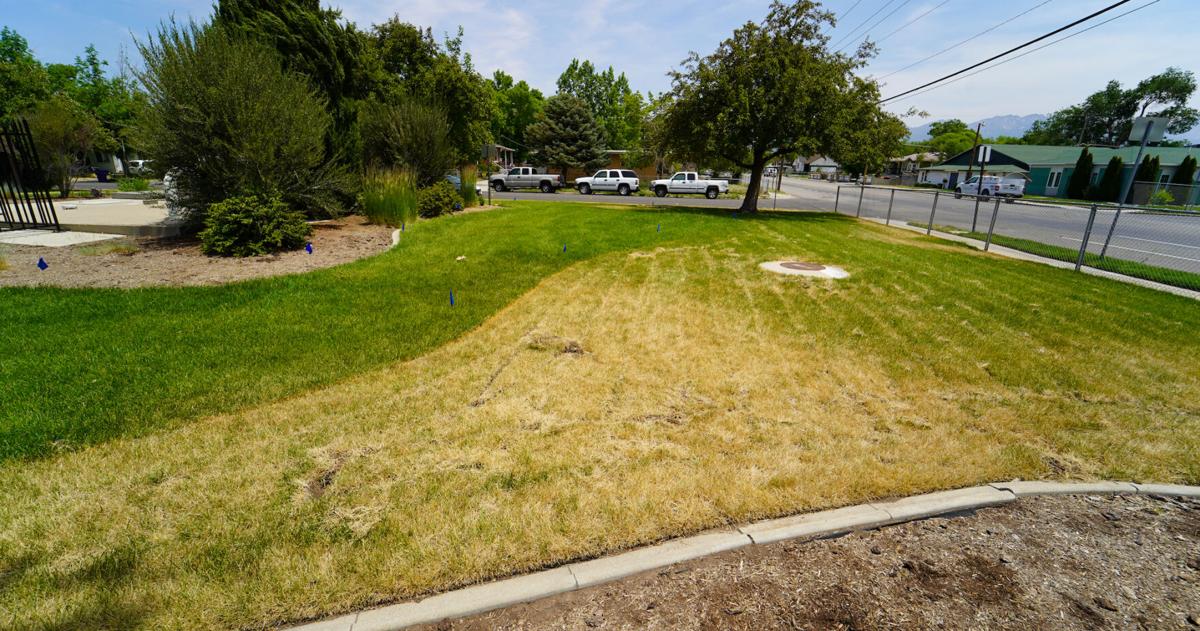
With a hot and dry summer likely, drought concerns for many Utah counties, and water restrictions projected, it is more important than ever that Utah citizens use their water wisely.
According to Kelly Kopp, Utah State University Extension water conservation and turfgrass specialist, Utah is the third driest state in the nation (behind Nevada and Arizona) based on average annual precipitation, yet per capita water use is among the highest in the country.
Urban landscape irrigation accounts for as much as 65% of annual municipal water use, yet much of it is applied in excess of what plants actually need.
“Not only is this a tremendous resource waste, especially in a drought year, but water lost through leaks and overspray can cause substantial damage to infrastructure such as streets and sidewalks, decks, patios, and decorative concrete,” Kopp said. “Scheduling outdoor irrigation according to plant water needs can reduce excess water use and help avoid infrastructure damage. In addition to conserving water, proper irrigation can encourage deeper root growth and healthier, more drought-tolerant landscape plants.”
Kopp recommends applying ½ inch of water with each irrigation. She said the total depth in any given week should reflect the amount of water being lost from the soil and plant system, which happens through evaporation and transpiration. Local evapotranspiration information is available through the Utah Climate Center at climate.usu.edu.
“It can be tempting to water more, but ½ inch is enough water to keep grass alive and is more than many other plants require,” she said. “Though grasses will likely go dormant for a time during the peak heat of summer, dormancy is a normal turfgrass biological process, and it will recover as temperatures cool in the fall.”
Kopp said sprinkler head type determines timing and cycling when irrigating.
|
Head Type |
Precipitation Rate |
Run Time for 0.5” |
Cycling Rec. |
|
Spray Head |
1.3-2.0” |
23-15 min |
3 cycles (8 or 5 min) |
|
Rotor Head |
0.4-1.0” |
75-30 min |
3 cycles (25 or 10 min) |
|
MSMT Head |
0.4-0.6” |
75-50 min |
3 cycles (25 or 17 min) |
“There have been recommendations to plant water-wise landscapes to save water, which is a good idea, but now is not the time to plant,” she said. “Wait until fall when it’s cooler, since we don’t have the water to establish new landscapes right now. We need to conserve in every way possible.”
Kopp shares these best practices for irrigation:
* Consider installing a “smart” irrigation controller, which uses local weather conditions to automatically schedule irrigation correctly. The state of Utah also offers rebates for them at utahwatersavers.com.
* Small areas of the lawn can become stressed during hot weather because of variations and inefficiencies in sprinkling systems. Instead of increasing the amount of time the entire sprinkling system is running, supplement water to the stressed areas with a small hose-end sprinkler, or water by hand with a hose.
* Keep your grass at least 2 inches high, and higher if possible. This encourages roots to grow deeper into the soil and increases overall drought hardiness.
* Irrigate shady and sunny areas differently. Shady areas require much less irrigation than sunnier areas.
* Cover bare soil in the garden and flower beds with 2-3 inches of mulch. Not only does this save water, it greatly reduces the need for weeding. Inexpensive mulch can be obtained from many local green waste recycling centers. Grass clippings also work well and are free.
* Hand-water or use drip irrigation to irrigate flowerbeds, vegetable gardens, and shrub beds. Water should be applied directly to the plant’s root zones and should penetrate the soil 6 inches deep for flowers and vegetables, and 2 feet into the soil for established trees and shrubs.
Further resources and information about conserving water in the landscape can be found atdrought.usu.edu and cwel.usu.edu.