
New Pentagon guidelines for mandatory testosterone deficiency screening of male service members aged 30 and above were “temporarily rescinded” from a Defense Department website shortly after they were posted earlier this week, according to a U.S. official.
The guidelines emerged from an announcement in mid-July from Defense Secretary Pete Hegseth that testosterone screenings were to become a part of the military’s annual health check-ups for male service members aged 30 years and older serving on active-duty and the reserves.

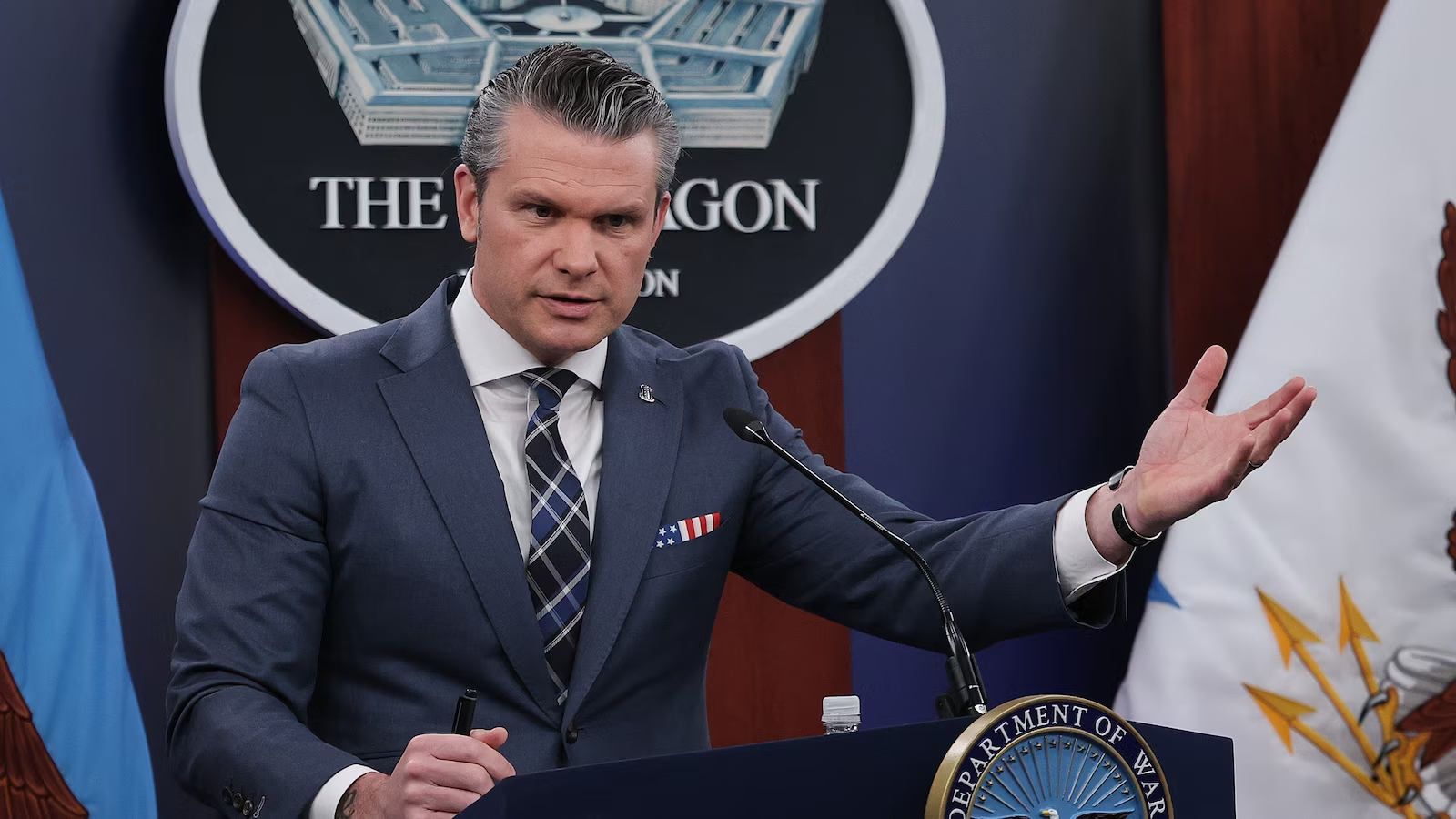
Secretary of War Pete Hegseth provides updates on military operations in Iran during a press briefing at the Pentagon, March 19, 2026, in Arlington, Va.
Win Mcnamee/Getty Images
Hegseth said that if clinicians recommended testosterone replacement therapy for a service member, it would be up to that individual to decide if they wanted to purse the treatment.
The announcement drew criticism from some medical experts who questioned the need for such testing and treatment.
On Wednesday, the Pentagon issued a press release from Sean Parnell, the Pentagon’s top spokesman, that “the Director of the Defense Health Agency issued comprehensive clinical guidance to the Military Departments and medical care providers” setting up “uniform screening and treatment pathways” in the military’s medical system for testosterone treatment.
The press release included links to three documents posted on the DHA’s website providing specific medical and clinical guidance, but by the next day, the guidelines had been removed from the website.
“Clinical Guidance for Health and Human Performance Optimization’ published on September 2, 2026, has been temporarily rescinded to allow for updates,” said a U.S. official.
“The ‘Interim Guidance on Testosterone Deficiency Screenings for Active Duty and Reserve Component Personnel’ remains in effect. The final clinical guidance will be issued shortly,” said the official.
In addition to providing specifics for male testing, the guidelines also provided guidance that female service members be asked about fatigue and disrupted menstrual cycles that could be associated with hormonal dysregulation
No other reason was offered as to why the guidance had been temporarily rescinded, but on Friday, a top adviser to Hegseth described the documents posted on the website as a “draft” document that had been “inadvertently” posted.
“What was posted earlier this week was something that was a draft. It was not approved for release,” Tim Parlatore, a senior advisor to Hegseth and his former personal attorney, said in an appearance on CNN.
“Somebody had put it out there inadvertently. And so, we needed to pull that back because we need a lot more input to make sure that the information on that reflected the current science and medical science and medical guidance, as opposed to certain antiquated protocols,” Parlatore said.
It’s not yet clear when new DHA clinical guidance for the testosterone screenings of male service members will be made available.
Low testosterone levels have been a concern in the military, particularly in the special operations community, where high stress, extreme physical labor, paired with not getting enough calories, could negatively impact testosterone levels — though research is still ongoing.
A very small percentage of men have a medical condition called Testosterone Deficiency. However, some doctors say they are concerned that the online popularity of “low-T” as a medical problem creates a false impression that this is a bigger problem than it really is.