
LOGAN – New research from Scott Hotaling of Utah State University and Eric Gilbertson of Seattle University indicates the five year-round frozen peaks in the continental United States are melting faster than many thought possible.
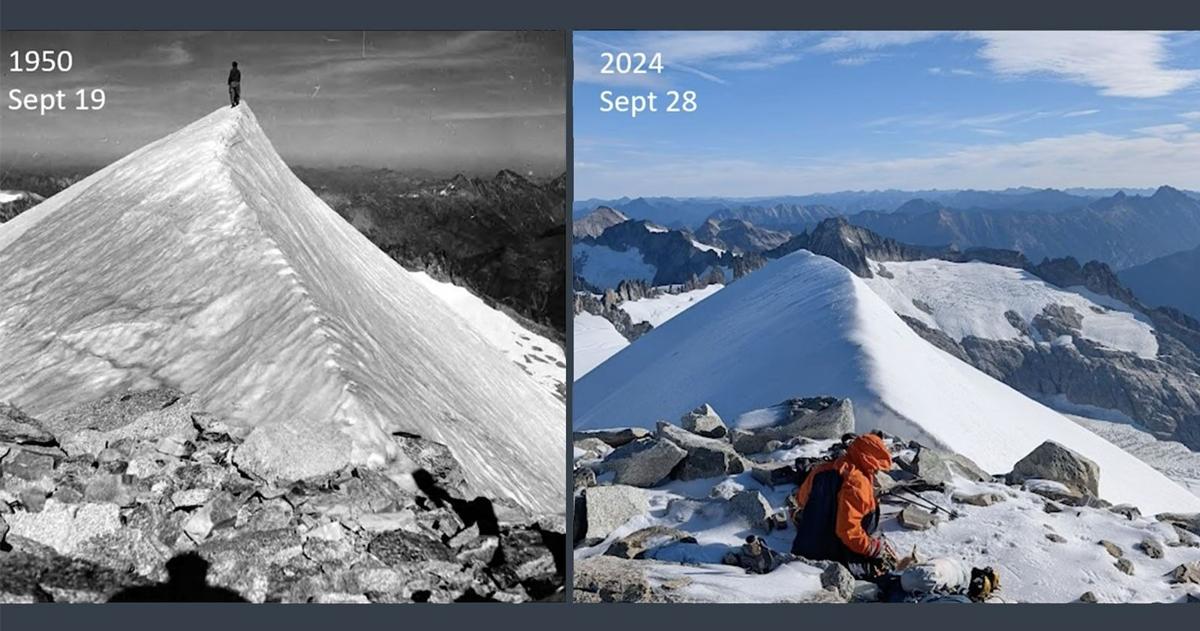
Hotaling, from USU’s Quinney College of Agriculture and Natural Resources, and Gilbertson used satellite data and historical photographs to document how these summits— all in Washington State — are being impacted by climate change.
The authors report the most dramatic changes in these peaks happened in the past 30 years, influenced by summer temperatures warming significantly and precipitation that now falls as rain rather than snow.
The team’s measurements of four of the five frozen summits indicate they had lost 20 feet or more in elevation because of snowmelt; only two still held year-round ice as their highest points in 2024 — Liberty Cap and Colfax Peak.
The team found that since mid-20th century the summit of Mount Rainier had declined more than 20 feet.
Hotaling said the team’s findings are an obvious sign how climate change is impacting these well-know and once pristine places.
Gilbertson said the average temperatures on these summits is almost 5.5 degrees higher than it was in the 1950s.