
As the high-stakes midterm elections approach and hundreds of candidates make their case to voters, in many cases, those voters won’t get a chance to see candidates debate — a trend over the last several elections, according to an ABC News analysis.
This year, 36 governors are up for election — 21 of those races will not see a debate between the two major-party candidates. That number includes three of the governor’s races ranked by ABC News as toss-ups: Georgia, Nevada and Ohio.
The number of governor’s races with no debate has increased over the past two midterm elections. In 2018, only two races out of 36 saw no debates — Alabama and Nevada. In 2022, that number went up to eight out of the 36 gubernatorial races.

Rate of major recent gubernatorial elections without debates
ABC News / Diana Paulsen
The trend is even more pronounced in Senate races.
Of the 35 Senate seats up for election in 2026, 21 of them have no debate scheduled between the major candidates including toss-up races in Ohio and Texas.
Of the 34 seats up for reelection in 2024, nine had no debates; in 2022, there were no debates for 14 out of 35.

Rate of major recent Senate elections without debates
ABC News / Diana Paulsen
While candidates skipping debates may help spare them from gaffes or missteps, it can be to the detriment of voters — who, an expert told ABC News, are missing an opportunity to not only learn about candidates’ platforms, but also how they handle pressure.
Why candidates have said they are declining debates
The candidates who have declined debates ahead of the midterms in November have cited a variety of reasons.
In Ohio, Democratic gubernatorial candidate Amy Acton declined to debate her Republican opponent Vivek Ramaswamy, saying she did not want to “platform” his “baseless lies” — a reference to what she called false claims in some of his political ads. Ramaswamy has challenged Acton to debate him.

Democratic gubernatorial candidate Dr. Amy Acton, May 5, 2026, in Columbus, Ohio and Republican Ohio gubernatorial candidate Vivek Ramaswamy, May 5, 2026, in Columbus, Ohio.
AP
Sen. Tommy Tuberville, who is running for governor in Alabama, opted against debating Democratic opponent Doug Jones, telling a local TV station that “there’s so much difference between us. I mean, there’s no reason to get up there and argue about differences of opinion.” Jones has continued to call for debates.
In Texas’ closely watched Senate race, Republican candidate Ken Paxton had initially committed to a debate against state Sen. James Talarico earlier this summer. Despite Paxton’s commitment, ABC affiliate WFAA says their offers to host a debate have gone unanswered by Paxton’s team.
On Thursday, Talarico challenged Paxton to a debate on Fox News. Paxton’s campaign has not responded to requests for comment on his plans to debate.
Paxton did not participate in debates in his previous runs for office as attorney general.

Democratic Senate candidate James Talarico, Aug. 30, 2026, in Arlington, Texas and Republican Senate candidate Texas Attorney General Ken Paxton, Sept. 9, 2026, in Dallas.
AP
In Arizona, Gov. Katie Hobbs is declining a debate in her race — marking the second election cycle she has done so. In her 2022 race, she requested separate televised interviews of herself and her opponent, Kari Lake. When Lake declined, Hobbs opted not to debate.
This year, Hobbs again declined to debate, her campaign manager saying it was because “face-to-face engagement with Arizonans is more effective than a stage designed for short soundbites and political theater.”
Voters can’t see how candidates ‘react under pressure’
But no matter the reason for candidates’ decisions not to debate, the result is the same: voters are denied the opportunity to see a head-to-head comparison of the top contenders on their ballot.
Craig Hennigan, a lecturer in communications at the University of Nevada Las Vegas and director of their award-winning debate team, said when candidates skip debates, voters don’t get to see how they “react under pressure.”

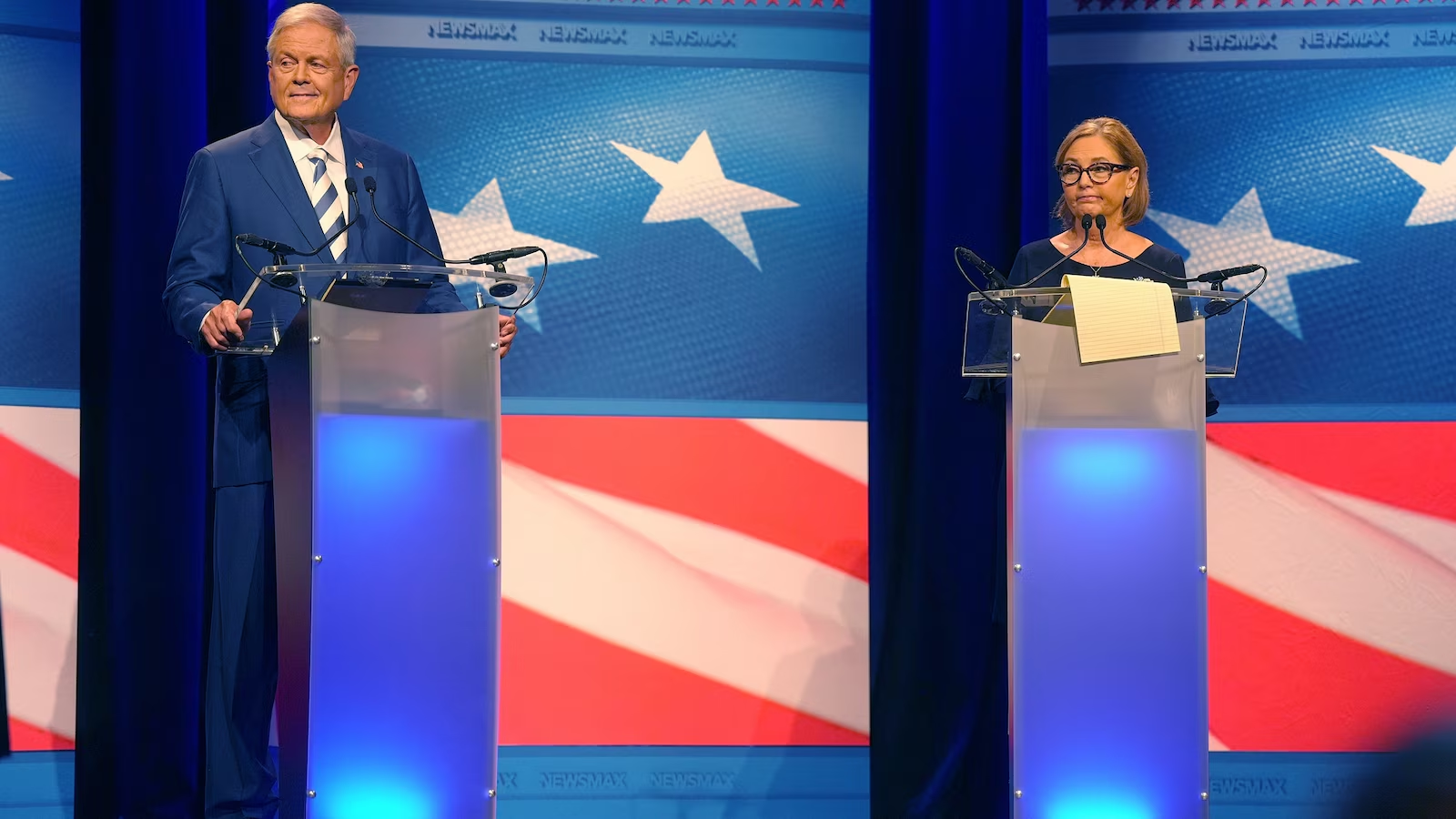
Rep. Ralph Norman listens as Sen. Darline Graham speaks during a special GOP Senate runoff debate to replace the late Sen. Lindsey Graham, Aug. 18, 2026, in Newberry, S.C.
Meg Kinnard/AP Photo
“[Voters are] not actually looking to watch a debate to learn about issues. However, the research has shown that people do incidentally learn about issues — but they’re more interested in the character being presented,” Hennigan told ABC News.
The same setting that creates moments of genuine insight for voters can put candidates in an unpredictable and vulnerable position, Hennigan said.
“[Candidates are] not certain what their opponent’s going to say, and whatever message they’ve been trying to curate, when they’re put on the spot, they might have a misstep. So there’s risk involved with having to perform in a debate,” he said.
Hennigan argues that the incentives look different for candidates heading into debates depending on their position, saying “if you have a very substantial lead, there is very little that you can gain as a candidate from participating in a debate” citing President Donald Trump declining to participate in primary debates in 2024 as an example.
His advice for candidates who do opt for a debate? “You don’t attempt to win. You just attempt to not lose. You are trying to avoid gaffes.”