
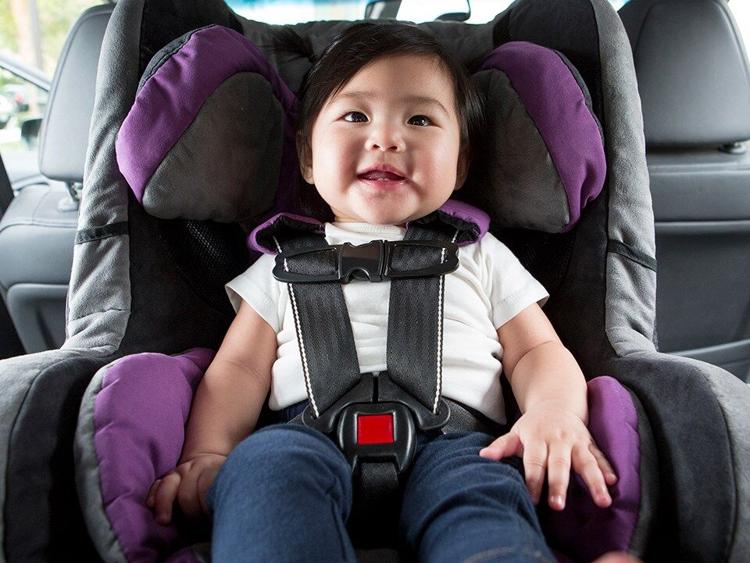
SALT LAKE CITY — As part of Child Passenger Safety Week, local health and law enforcement officials are urging parents and caregivers to reevaluate how they restrain children in vehicles, citing widespread errors in car seat installation across Utah.
More than 65% of car seats nationwide are installed or used incorrectly, according to national safety data—a figure that rises to 67.5% in Utah. To combat the problem during the annual safety week running Sept. 20–26, Intermountain Health Primary Children’s Hospital and the Utah Department of Public Safety’s Highway Safety Office are changing their educational approach. Rather than simply issuing checklists, experts are explaining the physical mechanics behind safety rules to help caregivers build better long-term habits.
“Parents aren’t ignoring the rules on purpose; they often just don’t realize how much a small mistake can change the outcome in a crash,” said Michelle Jamison, a certified child passenger safety instructor. “When you understand what a top tether or a booster seat is actually doing to protect your child’s body, it’s a lot easier to get it right every time.”
Child passenger safety technicians identified three critical mistakes frequently observed in the field:
First, caregivers frequently skip or misuse the top tether on forward-facing car seats. The strap anchors the top of the seat to the vehicle frame, significantly limiting how far a child’s head moves forward in a crash and substantially lowering the risk of traumatic head and neck injuries.
Second, parents often transition children out of booster seats too soon. Standard vehicle seat belts are designed specifically for adult bodies. A properly fitted booster seat elevates a child so the belt rests across the sturdy hips and collarbone rather than the vulnerable soft abdomen. Most children need to remain in a booster seat until reaching 4 feet 9 inches in height, typically between 8 and 12 years old.
Third, parents allow children to ride in the front seat before age 13. Even if a child meets height thresholds or sits quietly, developing bones and bodies are not equipped to withstand frontal impact forces or rapid airbag deployment. The back seat consistently provides the safest protection during collisions.
While state law mandates safety restraints for every young passenger, proper protection drops sharply as children grow older. Certified technicians offer free, personalized assistance statewide to help parents review height and weight limits or verify installation. Local check stations and appointments can be found at Clickit.Utah.gov.