
The Federal Reserve on Wednesday will issue a decision on the level of interest rates as the United States weathers a months-long bout of elevated inflation set off by the Iran war.
Global oil prices are hovering near a four-month high and the average price for a gallon of gasoline tops $4.30, according to AAA.
The U.S. economy has shown signs of additional strain in recent days, including a bond selloff that is pushing up borrowing costs for credit cards and mortgages.

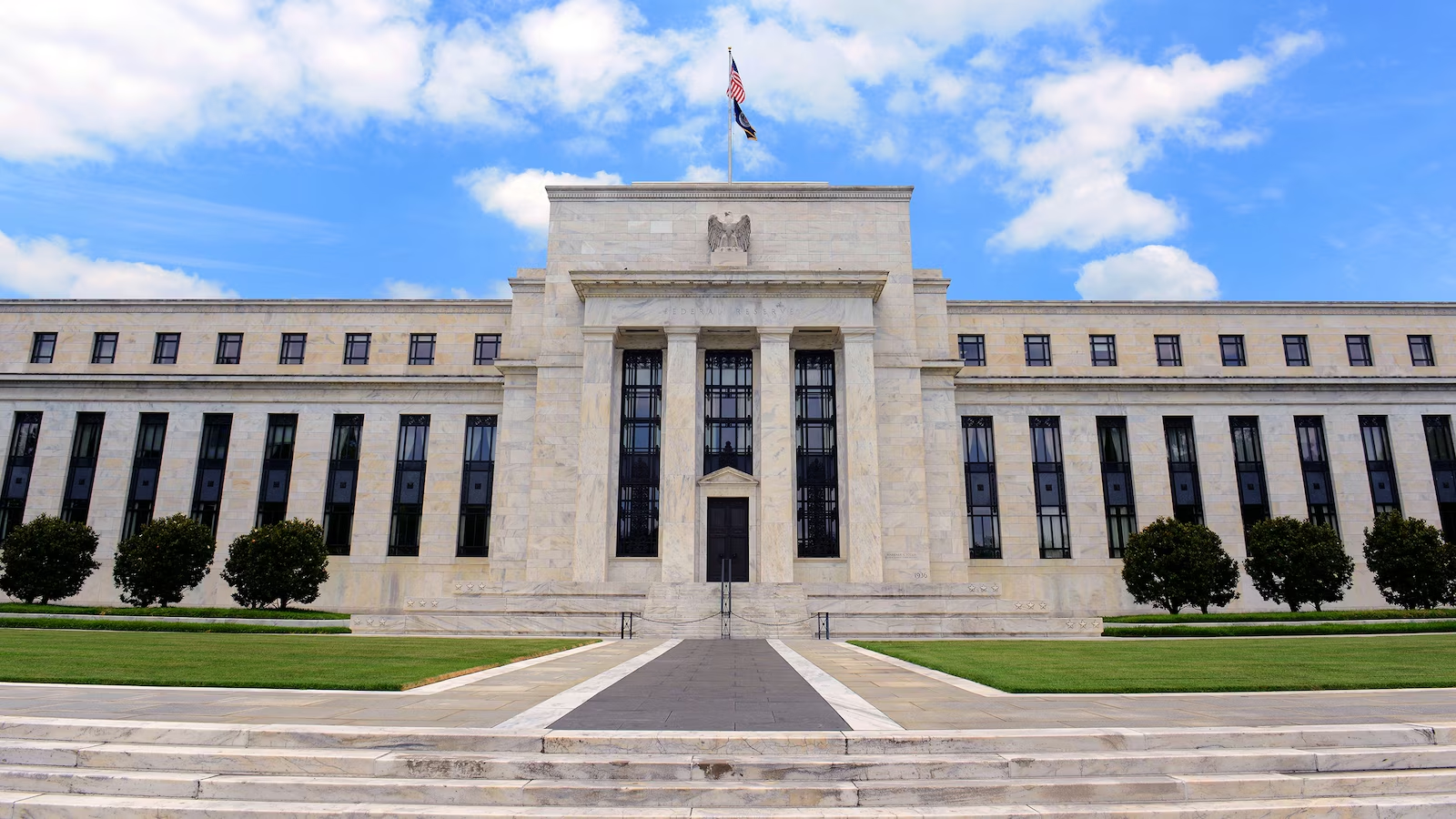
The Federal Reserve Building is the headquarters of the Federal Reserve System and 12 Federal Reserve Banks, in Washington, D.C.
STOCK IMAGE/Getty Images
The price woes have divided central bankers eager to contain inflation but reluctant to cool off the economy and weaken the labor market.
The Fed opted to hold interest rates steady at its most recent meeting in July. Three of the 12 members on the Fed’s policymaking board, however, voted in favor of a rate hike, marking the largest number of dissenters casting ballots in the same direction in a decade.
Financial markets expect the central bank to raise interest rates by a quarter of a percentage point, which would mark its first rate hike since 2023.
The odds of a quarter-point rate hike stood at 94% as of Tuesday afternoon, according to the CME Group’s FedWatch tool, a measure of investor sentiment.
Federal Reserve Chair Kevin Warsh, who took the helm of the central bank in May, has vowed to cool off persistently elevated price increases.
“The Fed’s predominant focus right now should be on prices,” Warsh said in remarks last month at the Fed’s annual summer gathering in Jackson Hole, Wyoming.

Chair of the Federal Reserve Kevin Warsh speaks during a news conference at the William McChesney Martin Jr. Federal Reserve Board Building in Washington, D.C., on July 29, 2026.
Brendan Smialowski/AFP via Getty Images, FILE
Prices rose 3.4% in August compared to a year earlier, maintaining the same level from the prior month, federal government data last week showed.
Inflation stands more than a percentage point higher than the Federal Reserve’s target rate of 2%.
Despite a stubborn bout of inflation, the economy remains fairly robust by some measures.
A blockbuster jobs report earlier this month showed employers added 162,000 workers in August, demonstrating continued resilience for the nation’s labor market. The economy grew over three months ending in June, defying fear of a downturn triggered by the Iran war.
Attacks on oil tankers in the Middle East pushed global crude prices above $108 a barrel as of Tuesday, which amounted to a rise of about 50% since the Iran war broke out in late February.
The average price of a gallon of gas in the U.S. stands at $4.32 as of Tuesday, putting it more than $1.30 higher than before the war, AAA data showed.
Record-high diesel prices have raised transport costs for many everyday products, including groceries, clothes and furniture.
The war in Iran, which began with a large-scale U.S.-Israeli attack in the winter, prompted Iran’s near-closure of the Strait of Hormuz, which facilitates one-fifth of global crude supply. Saudi Arabia over the weekend shut down a key pipeline bypassing the strait, which further constrained oil delivery and put upward pressure on prices.