
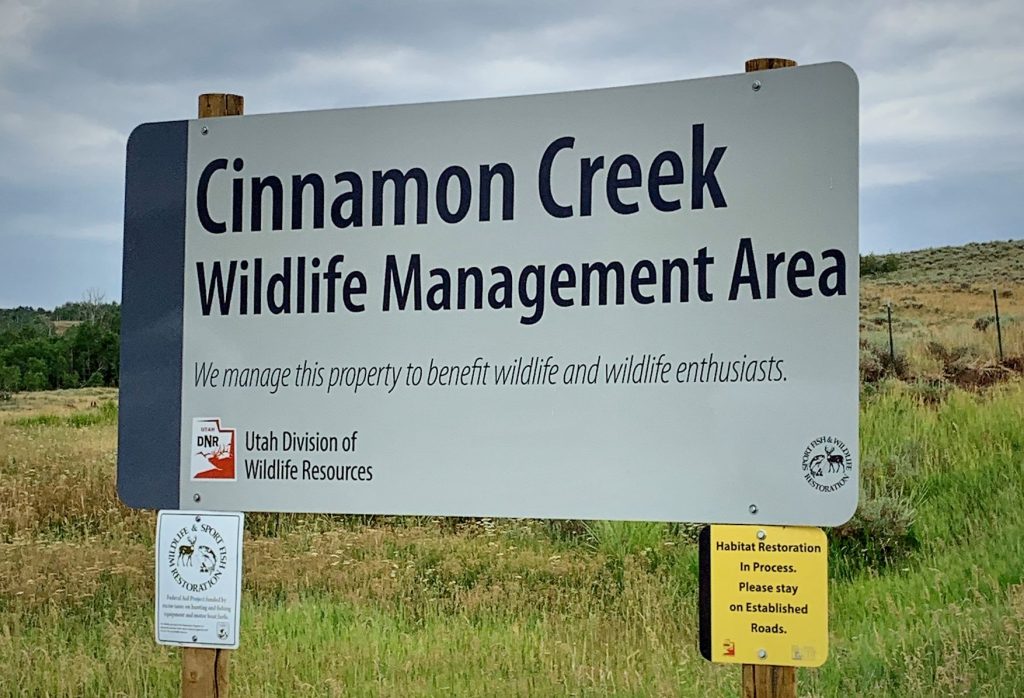
Cinnamon Creek and it’s 8,107-acres were added to the other 192 Wildlife Management Areas officially on Aug. 5, 2022.
SALT LAKE CITY — Roughly $3.4 million was allocated to selected habitat restoration projects at the recent annual Utah Division of Wildlife Resources Habitat Council funding meeting on April 19.

The DWR Habitat Council was created by the Utah Legislature to provide funds for the enhancement, preservation, management, acquisition and protection of fish and wildlife habitat, and for improving hunting and fishing access.
These funds come from license, permit, stamp and certificate of registration fees related to hunting and fishing.
The Habitat Council provides recommendations regarding the use of the funds received annually each year from the sales of hunting and fishing licenses.
DWR Habitat Conservation Coordinator Daniel Eddington said they are very appreciative of the hunters and anglers who are the backbone of wildlife conservation.
“Anyone who buys a hunting and fishing license helps fund many of the crucial habitat restoration projects that help to maintain fish and wildlife populations for future generations to enjoy,” he said. “Providing the necessary habitat for these species is crucial to their survival and requires ongoing restoration efforts as climate conditions continue to shift.”
This year’s license sales funding available to the Habitat Council totaled a little over $3.4 million and will help fund 88 projects over the next fiscal year (from July 1, 2023 to June 30, 2024). Several high-priority fish and wildlife projects will be funded, including:
The money will be used for maintenance and improvements on wildlife management areas across the state: There are 194 wildlife and waterfowl management areas in Utah. These state-owned and -managed properties help to conserve critical habitats for wildlife, help minimize and mitigate wildlife depredation on private property and provide anglers and hunters — who provide funding for the WMAs through the purchase of a fishing or hunting license — a place to hunt and fish in Utah. This project received over $635,000 of the total funding.
“We are extremely grateful for other partners who help fund these projects as well, which are so critical for fish and wildlife,” Eddington said. “We wouldn’t be able to complete as many of these necessary conservation projects without these important partnerships.”
Since 2006, the Habitat Council program has:
- Allocated over $40 million to complete 1,418 wildlife habitat projects across the state
- Improved over 322,505 acres of terrestrial habitat
- Restored 1,900 miles of streams and rivers
- Acquired 28,358 acres of land and waterways, now managed by the state or placed under permanent conservation easements for fish and wildlife
The recent Habitat Council funds are in addition to the $3.9 million in conservation permit funds that were allocated to wildlife research and additional habitat projects earlier this month.
However, both funding programs use a Utah Department of Natural Resources partnership-based program called Utah’s Watershed Restoration Initiative. The initiative serves as a centralized portal for funding and tracking the completion of these habitat-related projects.

Of Northern Utah’s WMA there are three in Cache County, two in Box Elder County and two in Rich County:
- Brigham Face WMA in Box Elder County
- Coldwater Canyon WMA in Box Elder County
- Richmond WMA in Cache County
- Millville-Providence WMA in Cache County
- Hardware WMA in Cache County
- Dry Canyon Conservation Easement in Cache County
- East Canyon WMA in Morgan County
- Swan Creek WMA in Rich County
- Woodruff Co-Op WMA in Rich County
- Kamas WMA in Summit County
- Henefer-Echo WMA in Summit County
- Middle Fork WMA in Weber County