
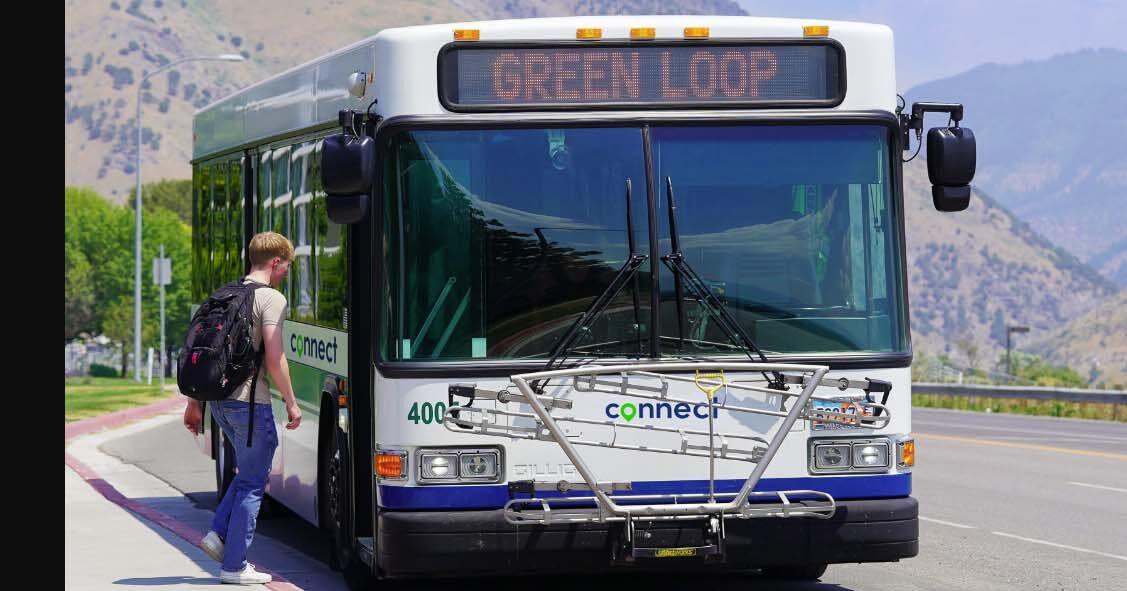
LOGAN – Cache Valley’s public Connect Transit bus system is seeking community feedback via an open survey on its strategic plan to improve local transportation services.
“Whether you ride the bus regularly, occasionally or have yet to try it, your perspective matters,” according to Todd Beutler, the general manager and CEO of Connect Transit.
“We encourage everyone to take a few minutes to share their priorities and see how transit can better serve the public in the years ahead.”
Beautler explains that, based on public input gathered since May, the Connect planners have developed a strategic plan with three potential service scenarios for the future. Those include a Multi-Hub, a New Destinations and an expanded Service Span scenarios.
Local residents can learn about and comment on those proposals by going online to www.surveymonkey.com/r/connect-transit-scenarios
The Connect Transit survey indicates that the Multi-Hub scenario would add two new transfer hubs outside of downtown Logan and refine bus routes to make them more accessible to riders.
Specifically, the Blue and Green loops would be extended further north and south; Route 8 would be realigned as a crosstown route; and the frequency of buses on Route 11 would increased to every 30 minutes.
That scenario estimates that nearly 7,000 more people would have access to frequent transit and to jobs throughout the valley.
The New Destinations scenario would maintain Logan as the system’s main transfer hub, while improving the directness of bus routes and expanding regional service.
Specifically, Connect Transit would add a Logan Canyon route in the summer months only and a new route connecting to Brigham City.
The Service Span scenario would extend the transit system’s operating hours on weeknights evening past 8:30 p.m. and add service on Sunday throughout the day.
The strategic plan suggests that nearly 50,000 people would benefit from late evening bus service on weeknights and on Sundays.
The goal of all of those scenarios, or a combination of elements of all three, is to provide faster, more direct service to improve travel times; improving performance on chronically delayed routes; and provide service to recreational areas and/or regional destination, Beutler exphasizes.
He acknowledges, however, that implementing any portions of the strategic plans for the transit service may require additional funding.
The Connect Transit survey concludes with typical demographic questions that are entirely optional.