
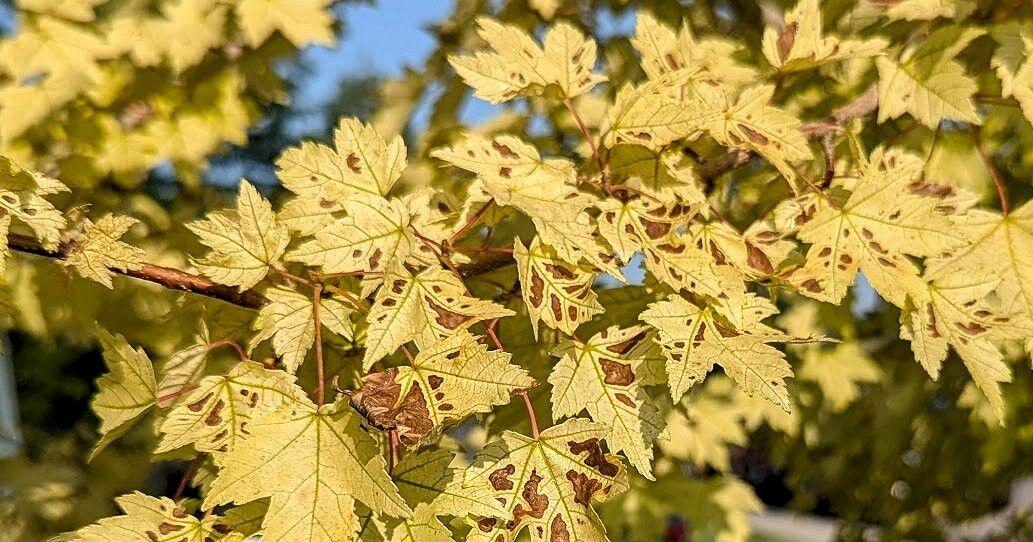
By August, many Utah trees develop brown, crispy edges on their leaves – a condition called leaf scorch. It often looks alarming but is usually not a threat to the tree’s long-term health.
The main culprit is Utah’s low humidity and intense summer sun. By late summer, trees can’t always move water to their leaves fast enough, resulting in browning around the edges or in patches. Sometimes only certain branches are affected. If the tree looks normal the following spring and the browning only appears late in the season, it’s usually just seasonal heat scorch. Moderate leaf drop is also a common symptom. Trees drop leaves, especially from the inner canopy, to reduce water needs. Commonly affected trees include horse chestnut, maples, lindens, poplars, and aspens.
Not all scorch is harmless. Trees with fungal vascular wilt disease, especially maples, will have branches that fail to recover over several years. Leaf scorch can also result from micronutrient deficiencies in Utah’s alkaline soils. Iron, manganese, and magnesium become less available to trees at high soil pH, leading to chlorosis – yellow leaves with light green veins that scorch as the season progresses. In severe cases, leaves turn white. This affects many species, including the red oak group of trees; sugar, red, and Autumn Blaze maples; raspberries; strawberries; and peaches. Adapted small trees include crabapples, hawthorns (excluding English hawthorn), serviceberry tree, Canada Red/Schubert chokecherry, City Sprite Zelkova, and Wireless Zelkovas. Consider these tips to protect your trees.
* For established trees, allow soil to dry between irrigations, and water deeply (18 to 24 inches) about three times a month. Treat nutrient deficiencies in late March or early April, before leaves emerge, using iron products with EDDHA or EDDHMA chelates. Some brand options include Miller Feriplus, GroMore Chelated Iron, Sprint 138, and Iron Sequestrene 138.
* For newly planted trees, scorch may result from overwatering, which can rot roots and mimic drought stress. In hot months, water new trees two to three times weekly in average soils – with more in sandy soils, and less in clay.
* To prevent chronic scorch and chlorosis in the future, plant trees more adapted to Utah soils, such as English, bur, and swamp white oaks; Queen Elizabeth, State Street, and sycamore maples; lindens; common hackberry; zelkova; and hybrid elms.
In most cases, summer scorch is simply a seasonal cosmetic issue. The key is knowing when it’s temporary and when it points to a deeper problem. For further information, contact your local USU Extension office.