
Note to readers • This story is made possible through a partnership between The Salt Lake Tribune and Grist, a nonprofit environmental media organization.
An effort by a Shoshone tribe in Utah is being recognized for its efforts to revive wetlands along a tributary of the Great Salt Lake — and send more water to the shrinking lake.
The High Desert Museum in Bend, Oregon selected the Northwestern Band of Shoshone out of nearly 100 nominees for its first-ever Schnitzer Prize of the West. Tribal leader Brad Parry will receive $50,000 to honor his collaboration and creative approach to healing a landscape once devastated by violence.
“It’s personally satisfying to see where we’re at,” said Parry, who serves as vice chairman of the Northwestern Band of the Shoshone Nation in Ogden. “The hard work everybody’s put into it is creating results.”
Battle Creek, just north of the Utah-Idaho border in Cache Valley, marks one of the bloodiest sites in American history. More than 150 years ago, Shoshone families wintered there, sheltered by willows and bluffs along a tributary of the Bear River. In January 1863, U.S. soldiers descended on the river valley and slaughtered hundreds of tribal members. The event, now called the Bear River Massacre, marked the largest slaying of indigenous people in U.S. history.
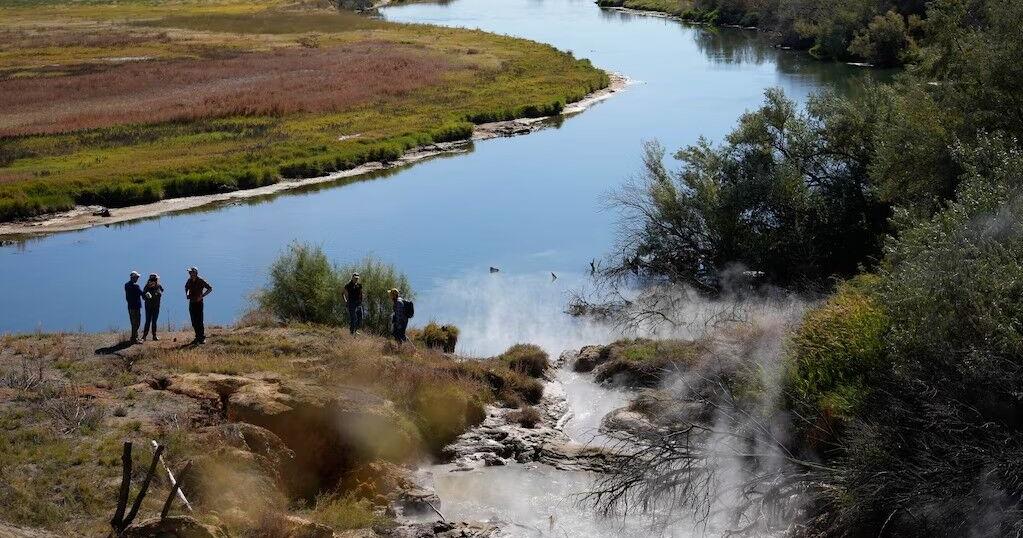
The Shoshone abandoned the site for decades. But in 2018, members of the Northwestern Band bought the land. Around 350 acres had been transformed by intensive grazing and invasive species. But the tribe wanted to return the site to a state their ancestors would have recognized.
“People were like, ‘oh, you need to build a cultural center up there,’” said Parry, who serves as vice chairman of the Northwestern Band of the Shoshone Nation in Ogden. “But the best way we can teach our culture is in the ground.”
The Shoshone call the site “Wuda Ogwa,” which means “Bear River” in a literal translation.
The tribe, along with an army of volunteers, has spent the last several years ripping out water-sucking Russian olive and establishing native plants. The willows and wetlands have returned, along with beavers and birds. Parry estimates that removing nonnative trees and slowing Battle Creek’s flow will save around 10,000 acre-feet — a substantial amount of water that will now make its way to the shrinking Great Salt Lake.
From the onset, Parry knew the effort would be a heavy lift.
“We’re a very small tribe,” Parry said. “We just don’t have the money.”
He tapped Utah universities and contractors he met while working for the U.S. Bureau of Reclamation. Conservation groups like The Nature Conservancy, Trout Unlimited, and Tree Utah donated money, expertise and saplings. Franklin County, federal agencies and neighboring farmers were also eager to help. Private companies not typically associated with environmental restoration — like Proctor and Gamble, Northrop Grumman and Rio Tinto —provided volunteers to pull weeds, plant willows and take out invasive species.
Parry figures the grants, in-kind donations and free labor at Wuda Ogwa amount to “millions” of dollars.
“I tell them … ‘Come back here in 30 years and show your grandchildren, I planted this tree,’” Parry said. “’You’re bound here now.’”
The inaugural Schnitzer Prize of the West is meant to elevate restoration projections in the Intermountain West that foster “unusual” collaborations and tackle complex issues, said Dana Whitelaw, executive director of the High Desert Museum.
“To be successful, these types of projects need to be cross-discipline,” Whitelaw said. “One of the really important disciplines that Brad’s project is working on is cultural healing … along with the ecological impacts of working on water in the West.”
The museum had 93 nominations for the prize from projects throughout the Pacific Northwest and Great Basin. It will present Parry with the prize during a ceremony in Portland, Oregon on May 16.
“If there’s one kind of uniting ecological legacy issue for us in the West,” Whitelaw said, “it’s water.”
Parry expects the partnerships at Wuda Ogwa to continue. Parry said that Utah State University professors have offered to take core samples at the site to study and demonstrate how Wuda Ogwa has become a carbon sink, absorbing climate-altering emissions. The University of Utah continues archeological work there as well, helping to document its rich history.
The work at Battle Creek paid off during the spring of 2023, when a record-breaking snowpack brought immense runoff. The stream and its wetlands absorbed flood waters, Parry said, protecting neighboring farms, culverts and roads. The restored waters also help filter sediment, fertilizers and other pollutants, contributing to a healthier Bear River — the Great Salt Lake’s largest tributary. The lake, in turn, has impacts on the local climate, cooling the air and contributing to snowpack that Utah, Wyoming and Idaho share.
“Our culture said our job is to take care of Mother Earth,” Parry said. “That’s helping the climate overall, helping the Great Salt Lake, [bringing] more snow, more rain. Hopefully it snowballs and just grows.”