
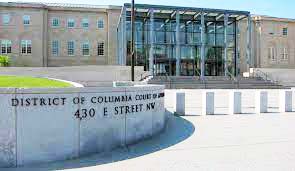
Utah Attorney General Sean Reyes has filed a federal lawsuit in the District of Columbia Court of Appeals seeking to overturn the Ozone Interstate Transport Rule being imposed by the Environmental Protection Agency.
WASHINGTON, D.C. – As promised in March, Utah Attorney General Sean Reyes filed a lawsuit in federal court here June 20 seeking to overturn the federal Environmental Protection Agency’s recently released Ozone Interstate Transport Rule.
That litigation came in response to the EPA’s finalized so-called “good neighbor” plan, which aims to cut down on cross-state smog pollution from power plants and other industrial sources.
That plan would require 23 states – including Utah – to take steps to reduce emissions of nitrogen oxide that form ground-level ozone, commonly known as smog, that make it difficult for downwind states to meet standards set for ozone by the 2015 National Ambient Air Quality Act.
Reyes’ lawsuit is supported by a host of state and congressional officials including Gov. Spencer Cox; Utah House Speaker Brad Wilson (R-Salt Lake); U.S. Senators Mike Lee (R-UT) and Mitt Romney (R-UT); and U.S. Representatives Blake Moore (R-Dist. 1), Chris Stewart (R-Dist. 2), John Curtis (R-Dist. 3) and Burgess Owens (R-Dist. 4).
“The Ozone Transfer Rule released by the Environmental Protection Agency harms Utahns and threatens our ability to provide affordable and reliable baseload energy to our state,” they said in a joint statement issued here.
EPA officials responded to a Mar. 17 joint letter from those same officials by maintaining that the benefits of their “good neighbor” plan far outweigh its admittedly regrettable impacts in terms of raising energy prices.
They say that controlling ozone emissions from new and existing sources in nine industries – including waste incineration, iron/steel mills and natural gas power generation – will result in annual net benefits of $13 billion in savings from 2023 to 2042.
They also claim that their “good neighbor” plan will prevent 1,300 premature deaths and cut asthma symptoms by 2.3 million cases.
Environmental groups blame Utah for much of the air pollution in adjacent Colorado.
The EPA plan would primarily impact oil and gas activity in eastern Utah and the coal-fueled Hunter and Huntington power plants operated by Rocky Mountain Power in Emery County.
Cox has said that Utahns have already dramatically decreased ozone emissions on their own. He also insists that Utah’s “all-of-the above” energy policy has powered decades of prosperity by providing some of the country’s most reliable and affordable energy.
“This balanced and commonsense approach has powered our state, fueled our economy and maintained a high quality of life for Utahns,” the governor argues.
“However, the Biden administration has now turned to executive rule-making to enact policies that will force early closures of Utah power plans.
“That will put reliable, affordable and dispatchable power significantly at risk – and in only a few years.”
EPA officials counter that the cost of achieving their planned ozone reductions from now until 2042 would only be $910 million and that its plan will only increase the cost of power by slightly more than 1 percent.
But Utah officials aren’t buying those estimates, which they insist are hopelessly optimistic.
“We stand united in pushing back against the administration egregious power grab that hurts Utahns,” their joint statement concludes.
“We will fight for a responsible energy policy that embraces efficiency and is based in reality, because keeping the lights on is the only option.”
In his lawsuit, Reyes is asking the Court of Appeals in Washington, D.C. to review the EPA ruling, alleging that the EPA has overstepped its authority by taking on legislative powers reserved for Congress.