SALT LAKE CITY – The term “crowded” doesn’t adequately describe the field of candidates now running for Utah’s seats in the U.S. House of Representatives in Washington.
When the filing period for prospective candidates closed on Mar. 13, a total of 36 hopefuls had signaled their intent to complete for just four seats in Congress.
Moreover, 23 of those candidates had also declared their intent to gather voters’ signatures.
That choice will guarantee them a place on the state’s primary ballot in June, provided they can gather the required 7,000 signatures to qualify.
Since the late 1940s, Utah has depended on its caucus-convention system to pick candidates for federal offices. In 2014, however, the Legislature added the signature-gathering path as another way to qualify for the state’s primary election if a candidate failed to get the nod from his or her party’s nominating convention.
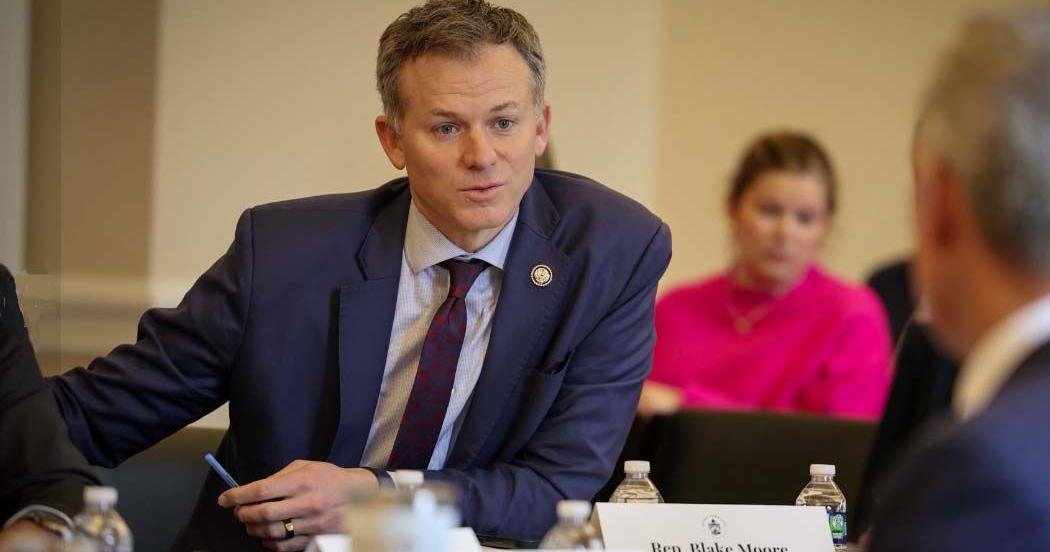
For example, here in what has become state’s 2nd District in northern Utah, incumbent U.S. Rep. Blake Moore (R-UT) is taking no chances on missing the primary, so he has already gathered 7,247 signatures.
The three-term congressman is facing two challengers from his own party – former state lawmaker Karianne Lisonbee and former combat engineer Colton Hatch. Both of those contenders have opted to only complete at the GOP convention on April 25 and will not gather signatures.
The eventual Republican candidate in District 2 will also face one of four Democratic candidates in the November election. Those candidates include Peter Crosby, a senior data analyst supporting higher education from Providence; Tyler Farnsworth, a mental health nurse practitioner from Salt Lake City; auto financier Ian Parrish; and U.S. Army veteran Jarom Gillins.
With the exception of Crosby, all of those Democrats have elected to gather signatures.
In the wide-open race and hotly contested race for the newly created Democratic enclave in Salt Lake County, seven Democrats, four Republicans and one Libertarian are in the running.
The Democrats hoping for a home-court advantage include former congressman Ben McAdams; state Sen. Nate Blouin; former state Sen. Kathleen Riebe; Eva Lopez Chavez, a member of the Salt Lake City Council; tax attorney Mike Farrell; Luis Villarreal, a software engineer; and Liban Mohamed, a former public policy expert for TikTok.
Long-shot Republicans who have filed in the uphill battle in the 1st District include Dave Robinson, Jonathan Lopez, Stone Fonua and Riley Owen.
The sole Libertarian running in the 1st District is Jesse West.
In the 3rd District, which encompasses most of eastern and southern Utah, incumbent Republican Celeste Maloy filed after Rep. Burgess Owens announced that he would not seek re-election.
Opposing Maloy so far are former GOP gubernatorial candidate Phil Lyman and Republican candidates Tyler Murset and David Harris.
Also in the running for District 3 are Democrats Kent Udell and Steven Merrill, along with Constitution Party candidate Cassie Easley.
In the 4th District in western Utah, incumbent U.S. Rep. Mike Kennedy (R-UT) leads the field of Republican candidates that includes Pasitale Lupeamanu, Seth Stewart, Scott Hatfield, Isaiah Hardman and Tyrone Jensen.
Vying to represent Democrats in the 4th District are Jonny Larsen and Archie Williams, while Taylor Wright is the only Libertarian in the race and the final candidate Steven Burt is unaffiliated.