
WASHINGTON, D.C. – U.S. Sen. John Curtis (R-UT) has jointed forces with Senate colleague Lisa Blunt Rochester (D-DE) to propose legislation to manage rapid, resource-intensive expansion of large-scale data centers nationwide.
The pair introduced the Data Center Community Empowerment Act and the Data Center Transparency Act into the 119th Congress on Oct. 1. Those bills would provide communities with better information and resources to understand the impacts of data center development while preserving local control over decisions about new projects.
“Americans are rightly skeptical when a large company tells them not to worry about the impacts of a new data center in their community,” according to Curtis.
“The answer to that distrust is transparency. Communities deserve independent, reliable information about what these projects mean for their power bills, water, infrastructure and local economy.”
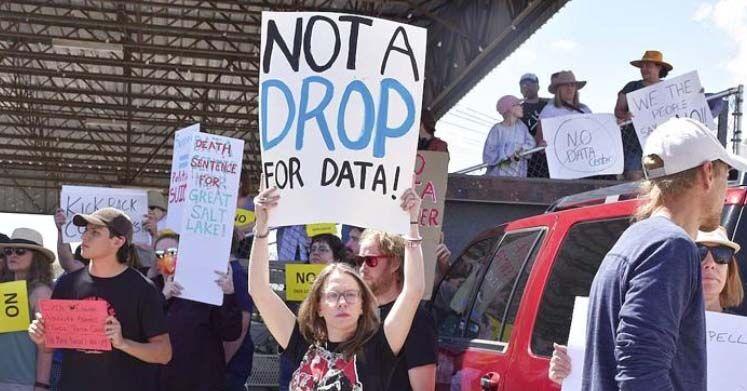
While many Americans react instinctively to news of a data center proposal with a resounding yell of “Not In My Back Yard!,” members of Curtis’ staff in Washington acknowledge that emerging technologies – especially artificial intelligence — increasing depend on data centers and the infrastructure that supports them.
As demand for such technologies grows, many communities will face decisions about whether and how to accommodate new development.
AI data centers share many similarities with traditional data centers, according to a recent industry update from IBM. They each contain hardware such as servers, storage systems and networking equipment. Operators of both type of tech centers need to consider things such as security, reliability, availability and energy efficiency.
The differences between these two kinds of data centers stem from the extraordinary demands of high-intensity AI workloads. In contrast to AI data centers, typical data centers contain infrastructure that would quickly be overwhelmed by AI workloads. AI-ready infrastructure is specially designed for the cloud, AI and machine learning tasks.
Curtis and Rochester are members of the Senate committee on Commerce, Science and Transportation.
The Data Center Community Empowerment Act would establish a program at the Department of Energy (DOE) to provide technical assistance to state, local, and Tribal governments on the potential energy, water, infrastructure, economic and other community impacts of data center development; develop a Data Center Community Toolkit with accessible information and resources for local officials; provide independent project analysis at a community’s request; and preserve local decision-making by prohibiting DOE from recommending whether a project should be approved or rejected.
The Data Center Transparency Act would require the Environmental Protection Agency (EPA) and Energy Information Administration to collect and regularly update information on the environmental impacts and resource use of data centers.
“These bills give local leaders the facts and expertise they need to ask tough questions and make informed decisions,” Curtis emphasizes, “without Washington or industry making those decisions for them.”