
LOGAN – Getting lost or injured in Cache County’s 1,173 square miles of land, or Logan Ranger District’s 430 square miles of forest may not be a daily occurrence, but when it happens it can be catastrophic. That doesn’t even account for the 8.2 square miles of water in Cache County.

Keith Hamblin shows Matt Berry how to download a mapping software for a training exercise on Thursday Oct.10, 2024.
Keith Hamblin shows Matt Berry how to download a mapping software for a training exercise on Thursday Oct.10, 2024.
With the vast range of activities that can be done in the area, from rock climbing, mountain biking or horseback riding on land or canoeing, kayaking, water skiing or other water activities there are plenty of things that can go wrong.
Snow sports bring their own set of challenges. Snowmobiling, cross-country skiing or snow shoeing has its set of challenges. When somebody gets lost or injured Cache Valley Search and Rescue (SAR) is ready to help.
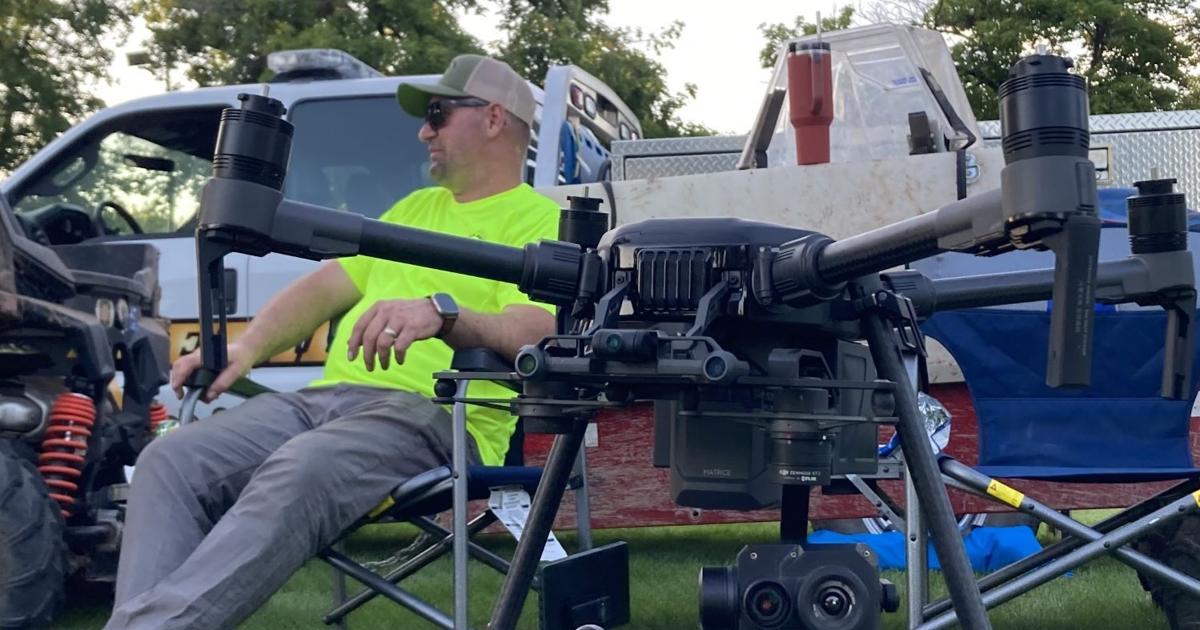
Some 40 members of SAR are using electronic bikes, drones in the sky and water and mapping technology. They also use GPS and cell phone technology. And others help find, pinpoint and rescue people in trouble.
SGT. David Welker, the Cache County Sheriff’s deputy who oversees SAR, said they meet regularly for training exercises.
“With all the changes in technology we need to be up to date on how it all works,” Welker said. “We do hands on training in the field to make sure we know how to use it properly when needed.”
On a recent Thursday night they were doing a treasure hunt using Sar topo, a computer mapping program used by first responders worldwide to manage incidents of all sizes including backcountry searches and rescue or hurricane response, recovery and many other uses.
“Using Sar topo gives us the ability to identify a location and pass the information to all of our team members,” he said. “When we don’t know the area, we can show within a tight tolerance where we have searched, and we can find the holes in the area we missed so they can search those areas more easily.”
Using the mapping software also benefits them when they are communicating with family members. It can be a talking point for people on the scene.
Welker said GPS tracking devices are not new, but the quality of GPS and public access to them has changed over the years.
“Smartphones help us, too. I’m 50 years old and 27 years ago we didn’t have cell phones or GPS tracking devices were limited,” he said. “We used to point at the mountain and tell people where they have searched. Today, with our technology they can show where on the mountain they have searched with all of the tracking software we use.


Member of Cache County Search and Rescue gather for a bike training exercise on Thursday Oct. 10, 2024
“Before, we just point to a mountain and say, ‘we have covered that mountain.’ It is much better to show people where they have been. Another game changing piece of equipment Starlink (an internet satellite service) has made a big difference when searching the back country.”
Most of the volunteers have electric bikes that can get up and down trails when searching for someone or getting to an injured person and offering first aid.
“We try to be cognizant of the rules for the back county,” he said. “We can’t take side by sides in searches in so getting in areas where combustion motorized vehicles are not allowed may not be possible, but if someone needs medical attention using electric bikes are better than hiking a trail.”
Their drone capacity has also changed. SAR captain Mike Chalmers purchased his own underwater drone to help search in water recovery.
“We have used it training,” Welker said. “We sunk a mannequin to see if we could find it and we were able to find it and recover it very quickly.”
They also use drones in the air to search for people. It is less expensive than calling a helicopter.
“We have boats, one from 1950’s, a small V-bottom boat,” Welker said.” I’m sure it was donated from the military. We had a citizen donate an 18-ft inflatable boat with 115 horsepower motor, probably $15,000 value to help us on our water searches.”
They’ve had prominent members of the community who have donated significant amounts of money for equipment that helps them be more efficient and professional.
“We have snowmobiles, a snow cat, side by side with tracks and wheels, we also have four wheelers for summer time use,” he said. “When we get the call, someone is missing, it doesn’t take long to send out a text to inform everyone. Depending on where it is, we will be on scene in 15-20 minutes.”

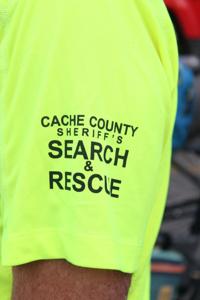
There are 40 members of the Cache Valley Search and Rescue team.
When needed they call emeritus members of SAR to give them a hand.
Two of the oldest search and rescue members retired after 61 years of service in Utah. Evan Riggs and Monte Coleman have experience and give it freely when they are asked.