
The U.S.-Israeli war with Iran set off a surge in gasoline prices as fighting clogged a critical waterway for global oil delivery. Shoppers held out hope, however, for a reopening of the Strait of Hormuz and a relatively speedy recovery.
Tit-for-tat attacks on oil and gas sites across the Middle East in recent days have all but foreclosed that glide path, since repairs could stretch on for months and diminish fuel supply in the meantime, industry analysts told ABC News.
The prospect of a prolonged oil shock ratchets up the risk faced by the U.S. economy, they added, threatening a blow for households already bedeviled by elevated inflation and a near-frozen labor market.
“Both sides have taken the gloves off when it comes to attacks on infrastructure — and that’s just bad news for everyone,” Severin Borenstein, a professor of business administration and public policy at the University of California, Berkeley, told ABC News.
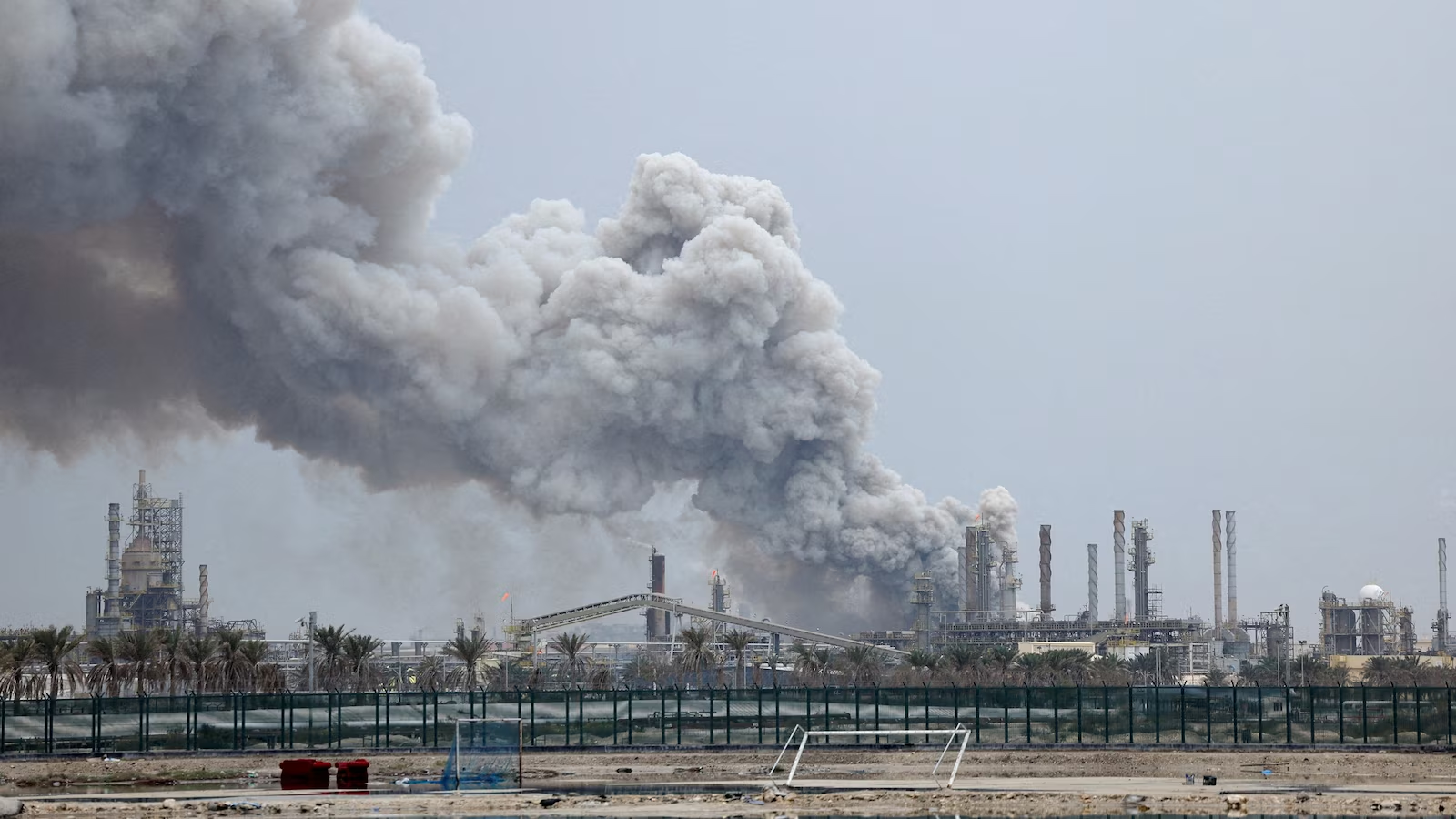
Iran launched a series of retaliatory strikes against vital energy infrastructure in nearby Gulf states after Israel hit its largest gas field a day earlier.
Among the retaliatory strikes, Iran hit the world’s largest liquefied natural gas (LNG) terminal at Ras Laffan in Qatar — the most serious attack on the country’s energy facilities since the start of the war.
In an effort to lower oil prices, the Trump administration has announced a release from the strategic oil reserve, eased sanctions on Russian oil and suspended a key regulation of domestic oil transport, among other measures.
The recent attacks on energy sites pushed global crude prices as high as $119 a barrel on Thursday, before oil shed some of those gains, hovering around $109 a barrel by Friday afternoon. Even after their dip, oil prices marked a staggering rise of more than 50% over the past month.
U.S. gasoline prices stand at $3.91, jumping 98 cents since a month earlier, AAA data shows.
A rapid rise in diesel prices, meanwhile, threatens to raise costs for groceries, apparel and just about every other product, since diesel makes up the lifeblood of the U.S. supply chain.

Tankers sail in the Gulf, near the Strait of Hormuz, as seen from northern Ras al-Khaimah, near the border with Oman’s Musandam governance, amid the U.S.-Israeli conflict with Iran, in United Arab Emirates, March 11, 2026.
Reuters
Attacks on oil infrastructure risk extending the fuel shortage and prolonging a potential bout of inflation, which would strain household budgets and shrink economic output, some analysts said.
“Even if you had hostilities end immediately, it would still take time to get those facilities repaired and back to full capacity,” Timothy Fitzgerald, a professor of business economics at the University of Tennessee who studies the petroleum industry, told ABC News. “The longer those key input costs are higher, the greater the pressure on the entire economy.”
Inflation stands at 2.4%, marking a cooldown from previous months but remaining slightly higher than the Federal Reserve’s target rate of 2%.
Iran’s strike on Qatar’s LNG terminal at Ras Laffan threatened a facility from which a fifth of the world’s liquefied natural gas is ordinarily shipped, according to the U.S. Energy Information Administration.
In a statement, the Qatari Foreign Ministry condemned the attack, calling it a “dangerous escalation.”
The attack reduced Qatar’s LNG export capacity by 17% and cost it an estimated $20 billion in lost annual revenue, according to QatarEnergy, the state-owned petroleum firm. Repairs are expected to take as long as five years, the company said.
Iran also hit energy sites in Israel, Kuwait and the United Arab Emirates, among other nations in the region.
Borenstein warned that the energy shortfall could press the brakes on economic output worldwide.
“If you have less oil and gas, the global economy is able to produce less stuff. The economy slows down,” he said. “The more damage there is, the more difficulty getting the global economy moving forward again.”
To be sure, the U.S. economy retains greater capacity to endure a global oil shock than other countries, since the U.S. is a net oil exporter, meaning it produces more oil than it consumes. But oil is sold on a global market, meaning U.S. oil and gasoline prices remain sensitive to fluctuations in worldwide supply and demand.
Repairs at energy sites likely cannot begin until hostilities end and work sites can be secured, some analysts said. They also cautioned that ongoing political tensions could elevate prices after the war ends and energy sites are repaired.
“Even if these facilities are rebuilt, there’s no guarantee they won’t be attacked again,” Robert Weiner, a professor of international economics at George Washington University, told ABC News. “Going forward, that will raise the level of uncertainty.”