
LOGAN – If the agricultural community hasn’t had enough to worry about this year, the Utah Department of Agriculture and Food (UDAF) is adding to the mountain of ag-related issues.
Low snowpack decreased water supply, plus an increase in fuel and fertilizer cost due to the conflict in Iran are plenty to cause uneasiness to area farmers.
In addition to those concerns, the UDAF wants farmers to prepare for the upcoming 2026 grasshopper and Mormon cricket season.
The state is coordinating with county partners, federal agencies, and land managers to monitor insect populations and respond where needed.
Grasshoppers and Mormon crickets are a natural part of Utah’s landscape, but under the right environmental conditions, populations can increase quickly. The insects can have a major impact on the state’s rangeland, agricultural production, and natural resources.
The program will focus on early monitoring, coordination, and targeted response efforts to reduce the potential for widespread impacts.
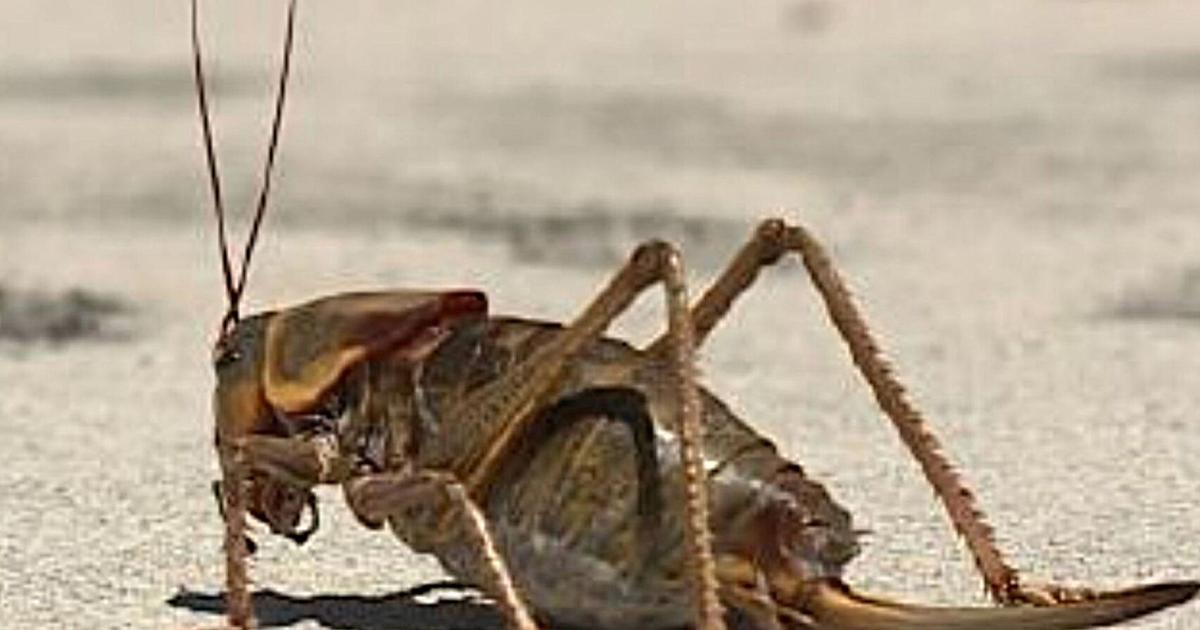
UDAF Entomologist Kristopher Watson said they have identified limited hatchings of pesky Mormon crickets in multiple locations across the state so far this year.
“Preparation and coordination are key to managing these populations effectively,” he said. “By working closely with our county and federal partners, we are able to identify areas of concern early and respond in a way that supports Utah’s agricultural producers and protects our working lands.”
UDAF will work with Utah State University Extension, the United States Department of Agriculture’s Animal and Plant Health Inspection Service (APHIS), and county personnel to conduct early-season surveys and population assessments across the state.
These efforts help determine where treatment may be necessary and ensure that any response is timely, targeted, and based on established thresholds.
The program emphasizes:
● Early detection and population monitoring
● Coordinated response planning with local and federal partners
● Targeted treatments in areas that meet established thresholds
● Responsible use of control methods to minimize impacts to non-target species
While conditions will continue to be evaluated throughout the season, UDAF encourages landowners and the public to remain informed and to work through their local extension agent and UDAF if concerns arise.
Updates on population conditions and program activities will be provided as the season progresses.
Contact Aaron Eagar, State Weed Coordinator, at aeagar@utah.gov or Liz Rideout, Quarantine & Insect Compliance Specialist, at erideout@utah.gov or 801-982-2200 for more details.
The UDAF oversees a wide range of programs to support the growth of Utah’s agriculture industry, conserve natural resources, ensure a safe and abundant food supply, and promote the economic vitality of rural communities.
To learn more contact ag.utah.gov.
The UDAF office can be found at 4315 South 2700 West – TSOB South Bldg, Floor 2 Taylorsville, Utah 84129-2128 ∙ PO Box 146500, Salt Lake City, UT 84116-6500
The Idaho State Department of Agriculture (ISDA) is also working to control the infestations of grasshoppers and Mormon crickets in Clark County, eastern Idaho.
They have found approximately 40 species of grasshoppers and Mormon crickets occurring in the Gem State, with five species reaching outbreak status in limited areas frequently.
These insects are currently causing problems for Ag operations in Owyhee County, who can deal with them with the help of the Idaho State Department of Agriculture.
The Mormon Cricket and Grasshopper Control Program is managed by the ISDA, which works to help ranchers, farmers, and the general public.
The large amount of grasshoppers and Mormon crickets in Owyhee County is experiencing a late emergence, and they have swarmed Southwest Idaho, Nevada, and Utah in recent years.
ISDA can be reached at agri.idaho.gov or by calling (208) 332-8500.