
The Centers for Disease Control and Prevention’s vaccine advisory committee voted 8-3 on Friday to remove the universal recommendation for the hepatitis B vaccine at birth.
The Advisory Committee on Immunization Practices (ACIP) voted to make vaccine recommendations based on the mother’s testing status.
The recommendations state that if a mother tests negative for hepatitis B, parents should decide, with the guidance of their health care provider, whether the shot is right for their newborn — referred to as “individual-based decision-making,” according to a document with the ACIP voting language.
The vote includes that newborns who do not receive the hepatitis B birth dose get an initial dose no earlier than 2 months old.
The voting language document emphasized there is no change to the recommendation that infants born to women who test positive or have unknown status to be vaccinated.

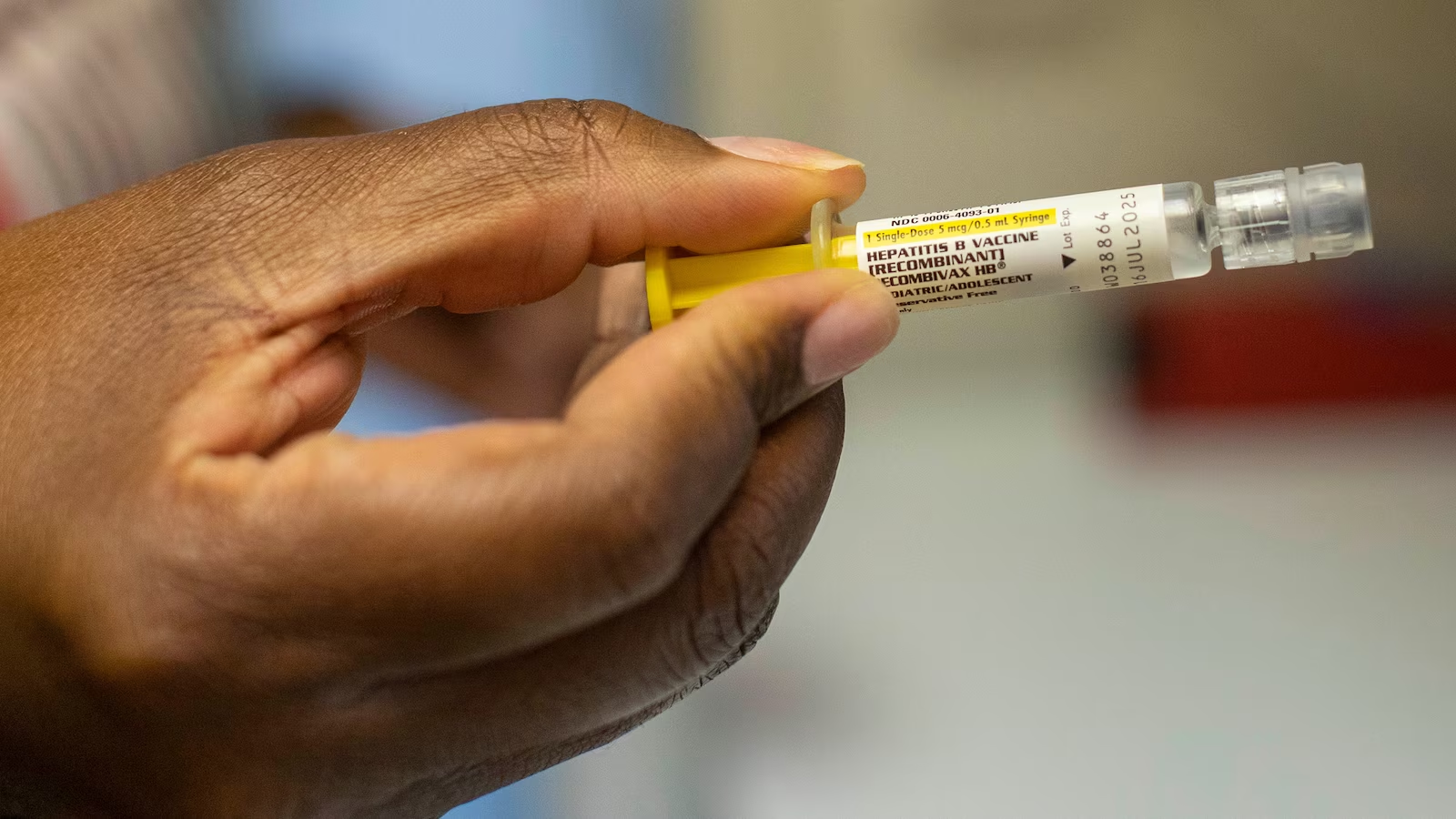
A Hepatitis B vaccine in Atlanta, Georgia, September 29, 2023.
Alyssa Pointer for The Washington Post via Getty Images
The language document also included a footnote that parents and health care providers should consider whether the newborn faces risks, such as a hepatitis B-positive household member or frequent contact with people who have emigrated from areas where hepatitis B is common.
In a second vote, the ACIP voted 6-4, with one abstention, that parents of older children should talk to their doctor about hepatitis B antibody testing before considering subsequent hepatitis B vaccination.
The testing would determine whether an antibody threshold was achieved and should be covered by insurance.
The CDC acting director, Health and Human Services Deputy Secretary Jim O’Neill, is expected to sign off on the change.
This is a developing story. Please check back for updates.